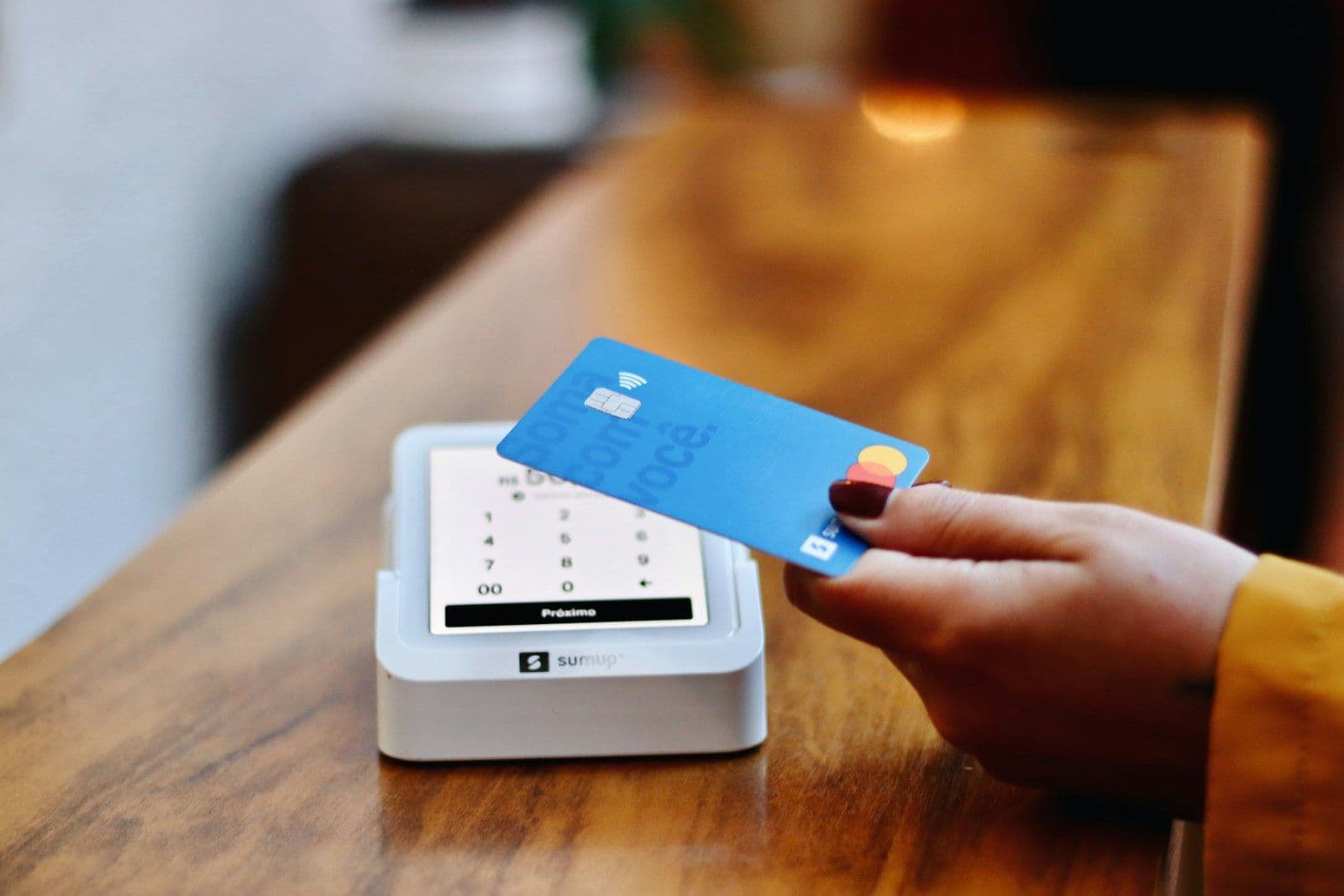

A charge-off on your credit report does not close the door on a credit card. It changes which cards will say yes, and what those cards cost. Most people with an old one never find that out, because they assume the answer is no and stop applying.
There is a second problem underneath that one. Charge-offs are among the most often misreported entries on a credit file, and a wrong charge-off costs you money for years longer than a correct one. Here is what actually decides the approval, and what to check on the entry before you apply.
Yes, and How Old the Charge-Off Is Decides Most of It
Lenders approve these applications every day. FICO lists charge off as the bottom rung of its reporting ladder, below 30, 60, 90, 120 and 150 days late, and says a recent late payment can be more damaging than an older one (myFICO, 2026). So a charge-off from four years ago is read very differently from one that posted last quarter. Age does not erase the mark. It quietly drains the weight out of it.
A charge-off is an accounting step. Under the interagency policy, an open-end account like a credit card is charged off when it hits 180 days past due (FFIEC, 2000). The lender writes the balance off its own books. You still owe the money, and the entry stays on the report.
| Term | What it means |
|---|---|
| Charge-off | The lender wrote the balance off its books. The debt still exists. |
| Date of first delinquency | The month you fell behind and never caught up. It starts the reporting clock. |
| Collection | A separate entry, opened when the debt is placed with or sold to a collector. |
| Paid charge-off | The same entry, with a $0 balance and an updated status. |
Paying a Charge-Off Updates the Status and Leaves the Clock Alone
Paying or settling changes one thing on the report: the balance drops to $0 and the status reads paid. The entry itself stays put. The seven-year reporting window begins 180 days after the delinquency that led to the charge-off, so it runs on exactly the same schedule whether you pay it or not (15 U.S.C. 1681c(c)(1)).
That is worth knowing before anyone sells you a payoff as a fix. What paying does buy you is a cleaner-looking file to an underwriter, and the end of collection calls and lawsuit risk. A $0 balance on an old charge-off reads better than a live balance sitting there. It is a real advantage. It is just not a reset button.
Your Last 12 Months Matter More Than That Old Charge-Off
Payment history is the largest piece of a FICO Score at 35% of the calculation, and it counts every month you have paid on time as well as the ones you missed (myFICO, 2026). An old charge-off is one bad stretch inside that history. Twelve clean months on a current account, a car loan, or even a small secured card adds recent evidence that points the other way.
This is the lever most people ignore while they wait for the charge-off to fall off. It is the one that moves during the wait. If you have any open account reporting monthly, keep it current and keep the balance low, because that record is what an underwriter reads next to the old mark.
Secured Cards Give the Highest Approval Odds After a Charge-Off
A secured card is the highest-probability approval for a damaged file, because your own deposit covers the issuer’s risk. Expect a small line. In Federal Reserve Bank of Philadelphia data covering the largest banks, the average credit limit on new secured cards was $362 in 2022, down from $482 in 2013 (Federal Reserve Bank of Philadelphia, 2024).
Small is fine here. The card’s job is to furnish a monthly on-time payment to all three bureaus, not to fund anything. Many issuers review the account after several months and release the deposit when they graduate you to unsecured. If your file is also thin behind the charge-off, pair the card with a credit-builder loan, which works the same way from the installment side. Our guide to building credit with no credit history walks through both.
| Your situation | Card type to target | What to expect |
|---|---|---|
| Charge-off under 2 years old, unpaid | Secured card | Your deposit sets the limit; $200 to $500 is normal |
| Charge-off 2+ years old and paid | Secured or entry-level unsecured | Better odds if the last 12 months are clean |
| Charge-off plus a thin file | Secured card and a credit-builder loan | Both report a monthly payment to all three bureaus |
| Charge-off with the bank you are applying to | A different issuer entirely | That bank’s own records are outside the seven-year rule |
Unsecured Fair-Credit Cards Are Real, and They Price for the Risk
Unsecured cards exist at this credit level, and they charge for it. The average APR on general purpose credit cards reached 25.2% in 2024, the highest level since at least 2015, with private label cards at 31.3% (CFPB, 2025). Cards marketed to rebuilding borrowers sit at the top of that range, often with an annual fee attached.
The band this reader is usually in is real and it is crowded. In CreditRefresh’s September 18, 2026 analysis of paying-member data, members’ VantageScore 3.0 averaged across the bureaus was 597, and 66.4% averaged below 620. Those are observed scores for our members, not a forecast for anyone else. If you want the card tiers mapped against score ranges, we break them down in best credit cards by credit score.
An unsecured card at 30% APR is only worth taking if you pay in full every month. Carried, it costs more than the deposit on a secured card ever would.
Apply Somewhere Other Than the Bank You Charged Off
Take your application to an issuer you have never defaulted with. Federal law caps how long a credit bureau may report the charge-off. It puts no clock at all on a bank’s own memory of an account it wrote off, and no issuer publishes how long it holds that memory. Whatever the bureaus show, the bank that took the loss has its own file.
Applying to a new issuer removes that variable from the decision. It also means the only thing the underwriter sees is the bureau data, which is the data you can actually check and correct.
Check the Charge-Off’s Own Details Before You Apply
Read the entry field by field before you send another application. In the Federal Trade Commission’s national accuracy study, one in five consumers had an error on at least one of their three credit reports, and for 5% the error was serious enough to raise the price they pay for credit (FTC, 2013). Charge-offs collect these errors because the account usually changes hands after the write-off.
Four fields carry most of the damage:
- Date of first delinquency. If it is later than the month you actually fell behind, the seven-year clock has been pushed out and the entry is overstaying.
- Balance. A charge-off sold to a collector should show $0 at the original creditor, with the balance living on the collection entry instead.
- Status. Paid charge-offs that still read as open with a balance are a common and expensive mismatch.
- Duplicates. The same debt listed twice, once by the bank and once by a buyer showing a live balance, double-counts one debt.
Check all three reports, because they disagree more than people expect. In CreditRefresh’s analysis of paying-member data, 56.6% of analyzed members had a gap of more than 20 points between their highest and lowest bureau scores, with a median gap of 23.5 points. Fixing an entry at one bureau does nothing at the other two.
One caution about how you dispute. A vague complaint comes back verified, every time. Here is a reviewer describing exactly that with a competing tool:
tricia walker, in a 1-star Trustpilot review of Dispute Beast on August 7, 2026, wrote: “This does not work the creditors just confirm all your information and nothing actually gets removed. And they don’t tell you that after signing up you’re gonna have to pay extra to have them even mail any of the letters which cost more if you do it yourself. This was nothing but a Baden switch and despite requesting cancellation, they still charge me for a second month.”
Name the specific field that is wrong, say why, and attach what proves it. Bureaus generally have about 30 days to investigate a dispute under the FCRA. Our credit dispute letter template shows the wording that identifies an inaccuracy instead of just objecting to the account.
Skip the paperwork. Lock in your spot.
CreditRefresh drafts your FCRA dispute letter and tracks the 30-day investigation window. You review, approve, and send. You stay in control.
Lock in your spotA Denial Buys You the File and Score for Free
A denial is not a dead end. When a lender turns you down based on a credit report, FCRA Section 615 requires it to tell you which bureau supplied the report, disclose the numerical score it used, name the key factors that hurt that score, and tell you that you may get a free copy of the report from that bureau within 60 days (15 U.S.C. 1681m).
That notice is the most specific read on your own file you will ever get for free, and it names the bureau that produced it. Pull that report inside the 60 days and compare the reasons given against the four fields above. If the denial cites a charge-off that is reported wrong, you now know exactly which bureau to work first.
Which Tool Helps You Work a Charge-Off Before You Apply
The charge-off entry sits at three bureaus, and whatever you use has to reach all three and produce a letter that names a specific inaccuracy. Here is how the main options compare on price, what they actually do about a charge-off entry, and how many bureaus they reach.
| Tool | What you pay | What that buys against a charge-off | Bureaus |
|---|---|---|---|
| CreditRefresh | $49.99/mo, no setup fee, cancel anytime. Mail letters yourself free, or pay RushMail per letter | Scans all reports and drafts FCRA letter per flagged charge-off entry | All three |
| Dispute Beast | From $49.99/mo for required monitoring. Mail letters yourself free, or pay Sprint Mail per letter | AI letter flow bundled with monitoring you must keep paying for | All three |
| DisputeBee | $49/mo personal, $129/mo business | Import a report, generate letters, print and mail each round yourself | All three |
| The Credit People | $99/mo standard, $119/mo premium, or $599 for 6 months | A firm disputes on your behalf; you never see the individual letters | All three |
| Lexington Law | $139.95/mo, invoiced at the end of each service period | An attorney-backed firm files the challenges for you | All three |
| Credit Karma | Free, paid for by lender referrals | Alerts when the charge-off updates; its dispute flow reaches TransUnion only | TransUnion |
Every price is that company’s own published rate, read off that company’s own site on September 15, 2026.
How CreditRefresh Turns a Charge-Off Entry Into a Ready-to-Mail FCRA Letter
Checking a charge-off field by field across three reports is the step almost everyone skips, and it is the step that decides whether the entry is costing you more than it should. In CreditRefresh’s September 18, 2026 member-data extract, 2.3% of disputed bureau-level items in mailed rounds had a recorded outcome. Within that subset, 47.9% were no longer reported on a newer pull of the same bureau, while 52.1% remained reported with a changed balance, status or negative flag.
We pull all three bureau reports, flag every item that looks inaccurate, incomplete, unverifiable, or too old to report, and draft a print-ready FCRA letter for each one you choose to challenge, with the specific right it stands on. Mailed rounds from our members average 23.6 disputed bureau-level items, which is the scale of the job we built this for: our average member carries 30 negative tradeline entries across the bureaus, with a median of 25. You review and sign every letter. Nothing leaves without your approval.
It is $49.99 a month, included with Refresh Monitoring, with no setup fee, no per-dispute charge, and no contract. Mail the letters yourself or hand a round to RushMail for a small per-letter fee. Members who work the full program and see no bureau score rise above enrollment can reclaim 100% of their Refresh Monitoring payments under our guarantee, whose conditions are published in full on the guarantee page.
Frequently Asked Questions
Can I still get a credit card with a charge-off?
Yes, and the two things that move the odds most are how old the charge-off is and what your last year of payments looks like. A secured card is the surest route while an unpaid charge-off is still recent, because your deposit covers the issuer’s risk.
What happens after 7 years of charge-off?
The charge-off must drop off your credit reports, and the clock starts 180 days after the delinquency that led to it, not from the charge-off date and not from the date you paid. Once it falls off, it stops being visible to any lender pulling that bureau, though the debt itself may still be collectible depending on your state’s statute of limitations.
Will Capital One approve me again after charge-off?
No issuer publishes its internal rules on former customers, so nobody can answer that for a specific bank. What is knowable is that the seven-year limit governs what a bureau may report and puts no limit on a bank’s own records, which is why applying to an issuer you have never defaulted with removes the question entirely.
Is it worth paying off a charge-off?
It often is, for reasons other than the report. Paying ends collection activity and lawsuit exposure and leaves a $0 balance where an underwriter can see it, though it does not shorten the seven-year reporting window.
Does a charge-off keep growing after it is written off?
It can, but only where the original agreement or state law allows interest and fees, so a balance climbing every month is worth checking rather than assuming. If the reported balance does not match what the creditor can document, that is a specific inaccuracy you can dispute.
Should I apply for several cards at once after a charge-off?
No. Each application adds a hard inquiry, and a cluster of them on an already-damaged file reads as distress to the next underwriter. Apply for one, and if it is declined, use the adverse action notice before you try again.
Does closing my other cards help my application?
It usually hurts. Closing a card removes its limit from your utilization math, which can push the ratio up right when you need it low, and we cover the trade-offs in how to close a credit card without hurting a credit score.
CreditRefresh reads the charge-off entry on all three of your reports and drafts the FCRA letter for whatever it gets wrong, before your next card application. It is included with Refresh Monitoring at $49.99 a month, with no setup fee and cancel anytime.