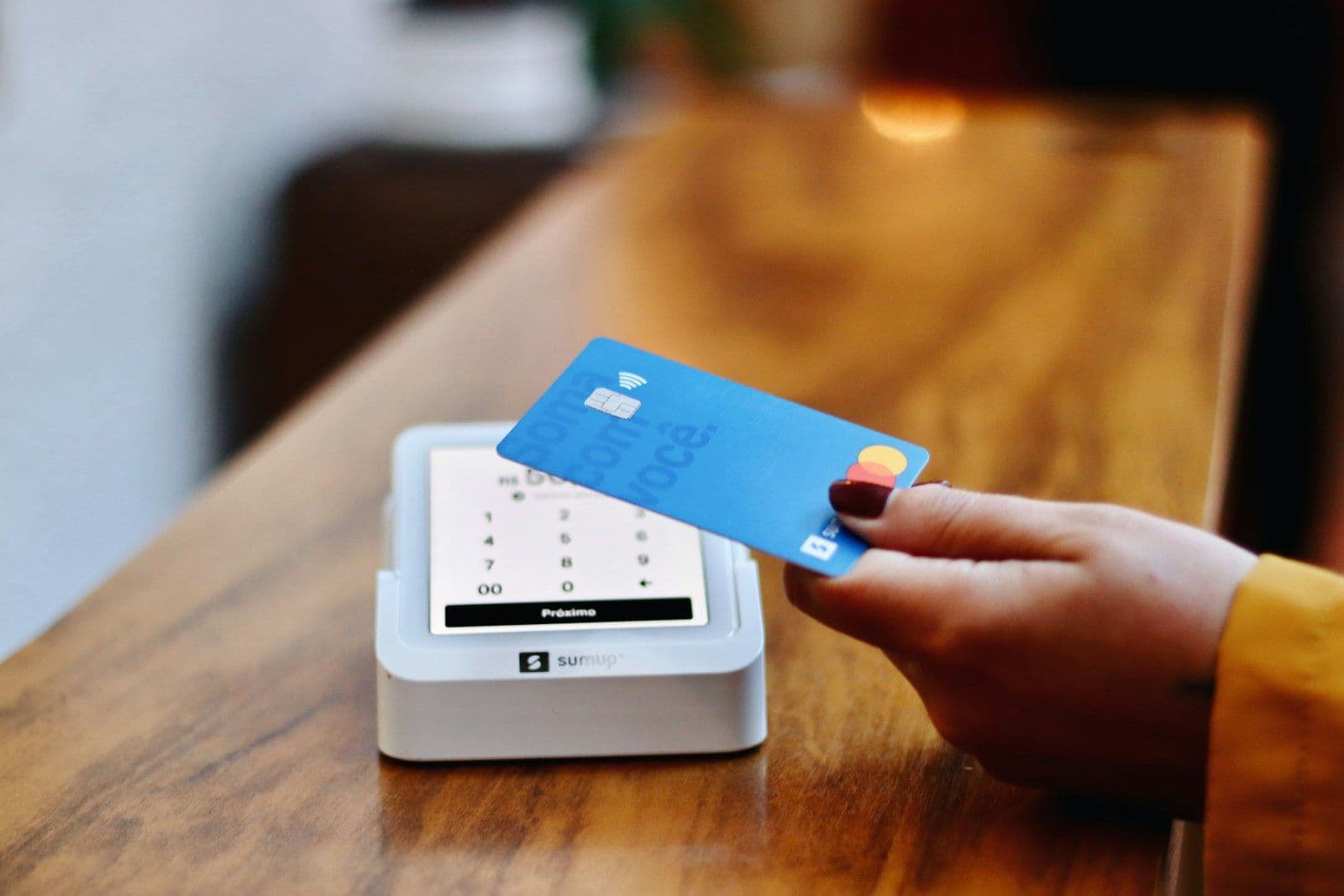

Most people think building business credit means starting over with a clean slate: new company, new file, no history. Then the owner applies for a first business card and finds the lender pulling his personal report anyway. For 1 in 5 consumers, that report has an error on at least one of the three bureaus (FTC, 2013).
Business credit does start from scratch, and the steps below build it in the right order. The first lenders still read the owner, though, so the personal file has to be right before the business file can grow.
What is business credit and how does it differ from personal credit?
Business credit tracks a company’s record of paying its bills, filed under the company’s own IDs. As the U.S. Small Business Administration explains, agencies such as Dun and Bradstreet, Experian Business, and Equifax track a company file under its EIN and D-U-N-S number. They do not file it under the owner’s Social Security number. The two systems use different bureaus and different score scales. They meet in one place: the personal guarantee.
| Feature | Business credit | Personal credit |
|---|---|---|
| Identifier | EIN and D-U-N-S number | Social Security number |
| Main bureaus | Dun and Bradstreet, Experian Business, Equifax business | Equifax, Experian, TransUnion consumer files |
| Common scale | PAYDEX 1 to 100 | FICO and VantageScore 300 to 850 |
| Governing law | Commercial rules, fewer consumer protections | FCRA and related consumer statutes |
The Fair Credit Reporting Act governs the consumer system. Business reporting carries fewer of those protections, so keeping the business file accurate is on the owner. A business owner new to credit reporting can start with how to build credit from scratch.
What follows covers setting up a new business credit profile. It does not cover repairing damaged business credit or qualifying for specific Small Business Administration loan programs. Both follow their own underwriting rules and timelines.
Why build business credit at all?
Business credit lets a company borrow on its own record, which protects the owner’s personal score. A strong business file can also win better supplier terms. Over time it cuts down how often lenders ask the owner to guarantee the debt personally.
- It keeps company debts off the owner’s personal report and personal utilization.
- It opens higher financing limits than a personal file usually supports.
- It gives the business more pull when it asks suppliers for net terms.
- It reduces the need for personal guarantees as the business builds a record.
The split also matters for risk. If a business runs entirely on personal cards and struggles, the owner’s personal score takes the hit. That can follow him into a mortgage or car loan years later. A separate business file keeps the damage inside the company.
How do you establish business credit step by step?
Build business credit in order, because each step needs the one before it. A file cannot form until the business exists on paper with its own IDs, its own bank account, and its own accounts that report.
- Form a legal entity such as an LLC or corporation to separate the business from its owner.
- Get a free EIN from the Internal Revenue Service to serve as the business tax ID.
- Set up a business address, phone number, and email that match everywhere.
- Open a business bank account in the entity’s exact legal name.
- Apply for a D-U-N-S number to open a Dun and Bradstreet credit file.
- Open net-30 vendor accounts that report payments to the commercial bureaus.
- Add a business credit card and pay every account early or on time, every cycle.
Skip a step and the whole thing stalls. A business with no entity or no EIN has nowhere for payments to report. The bills get paid, the bureau never hears about it, and no score forms.
How do you make a new business look real to lenders and bureaus?
Give the business its own address, phone number, and email, and use them the same way on every form. Bureaus match records by name and contact details. A company listed three different ways looks like three thin files instead of one real one.
- Business address: Use one physical or virtual address and write it exactly the same on your state filing, bank account, and vendor applications.
- Business phone: Get a number that belongs to the business, so it can be listed and checked.
- Business email: Use an address on your own domain in place of a free personal inbox.
None of this costs much. It does save you from a slow problem later, when a lender can’t tell which record is yours.
Why does a business bank account come before the credit accounts?
A business bank account is the first place the company proves it handles its own money. Open it in the entity’s exact legal name with the EIN, and run every business dollar through it. Lenders and vendors often ask for it on their applications, and it gives you a clean record of what came in and what went out.
Mixing personal and business money in one account undoes the separation you formed the LLC to get. It also makes your books harder to show when a supplier asks for proof the company pays its bills.
What is a D-U-N-S number and how does a business get one?
A D-U-N-S number is a unique nine-digit ID that Dun and Bradstreet issues for each physical business location. Applying for one opens a Dun and Bradstreet credit file. That file is where future vendor payments and the PAYDEX score get recorded.
The number is free to request directly from Dun and Bradstreet, so don’t pay a third party for it. Once the file exists, vendors and lenders can start filling it with the payment history scores are built on.
How do net-30 vendor accounts build a business credit file?
Net-30 accounts let a business buy supplies now and pay the invoice within 30 days. When the vendor reports those on-time payments to a commercial bureau, each one adds to the company’s record. Over time that record is what raises the business score.
Not every vendor reports, so pick the ones that do. Ask before you open the account which bureaus they report to. Office supply and shipping companies are common places to start. So are the suppliers you already buy from, once you ask them for terms.
Three to five reporting accounts is a common target before you apply for bigger financing. That gives a commercial bureau enough payments to score. Lenders and suppliers check that score before they extend more credit.
Should a new business use a business credit card?
Yes, used carefully, but know who is on the hook. Most cards for new businesses require a personal guarantee, so the owner stays personally liable if the company can’t pay. FICO scores are used in about 90% of U.S. lending decisions (FICO, 2026), and on a guaranteed card the issuer usually starts with the owner’s personal file.
That is why the owner’s own report matters on day one. Across July 2025 through June 2026, 95,511 credit card complaints were recorded in the CFPB’s public Consumer Complaint Database, and 11.7% of them were about incorrect information on the consumer’s report. Those are unverified consumer complaints about personal cards, and the CFPB does not confirm the facts alleged.
Apply only where you have a real shot, because every application can mean a hard inquiry. Eduardo F, in a 1-star Trustpilot review of Credit Karma on September 14, 2026, wrote: “Credit Karma gets people to apply for loans or credit cards with outstanding approval odds which I believe to be a complete lie. So they make me hurt your credit score with hard inquiries, when in actuality you have 0 approval odds, not outstanding.”
Once you have the card, keep the balance low for the same reason it matters on personal cards, a point covered in credit utilization. Carried balances also get expensive fast. The average rate on commercial-bank credit card accounts assessed interest was 22.15% (Federal Reserve Board, 2026).
How is a business credit score calculated?
Business scores weigh payment history most, much like consumer scores, but on their own scales. The Dun and Bradstreet PAYDEX runs from 1 to 100. A higher number means a stronger record of paying suppliers on time or early.
- Payment timing: Paying vendors and lenders on time is the biggest factor in most models.
- Number of accounts: How many accounts report, and how long they have reported, shapes how strong the file looks.
- Company profile: Company age, size, and industry risk count in some scoring models.
- Public records: Tax liens or judgments can lower a business score.
Skip the paperwork. Lock in your spot.
CreditRefresh drafts your FCRA dispute letter and tracks the 30-day investigation window. You review, approve, and send. You stay in control.
Lock in your spotDoes business credit affect personal credit?
Yes, through personal guarantees and through how the business is set up. A sole proprietorship offers no legal split at all, so its debts can land directly on the owner’s personal credit report.
Even with an LLC, a guaranteed card or loan can show up on the owner’s personal credit, or hurt it, if the account goes unpaid. Forming an entity and limiting personal guarantees is what keeps the two files apart, building on credit with no history.
On the personal side, the owner does have federal protection. Under the FCRA, a bureau that gets a dispute must reinvestigate and generally finish within 30 days, and must delete or correct what it cannot verify (FCRA Section 611, 1970). Most negative items, including collections and charge-offs, can be reported for seven years, and a Chapter 7 bankruptcy for ten (FCRA Section 605, 1970).
What mistakes slow down business credit?
Most delays come from skipping the setup steps or using accounts that never report. Without an entity, an EIN, and reporting accounts, payments never reach a business bureau. No file forms, however reliably the bills get paid.
- Staying a sole proprietor: There is no separate entity for a bureau to file credit under.
- Using vendors that don’t report: On-time payments to them build nothing on your business file.
- Mixing money: Running personal and business funds through one bank account blurs the split.
- Paying late: A late invoice damages a young file faster than the good ones built it.
- Ignoring the owner’s report: An error on the personal file follows the owner into every guaranteed application.
Which Tool Fixes the Personal Report Your First Business Card Checks?
Early business cards lean on the owner’s personal guarantee, and the tools that help with the personal side split into software you run, services that run it for you, and free apps that only watch. Here is how they compare on price, what you get, and how many bureaus they reach.
| Tool | What you pay | What that buys | Bureaus | Trustpilot |
|---|---|---|---|---|
| CreditRefresh | $49.99/mo, no setup fee, cancel anytime. Mail letters yourself free, or pay RushMail per letter | Scans your personal reports and drafts a signed FCRA letter per flagged item | All three | 4.3 (9 reviews) |
| Dispute Beast | From $49.99/mo for required monitoring. Mail letters yourself free, or pay Sprint Mail per letter | AI dispute app bundled with paid monitoring and a training session | All three | 4.2 (2,067 reviews) |
| DisputeBee | $49/mo personal, $129/mo business | Letter templates you print, mail, and track yourself | All three | 3.2 (68 reviews) |
| The Credit People | $99/mo standard, $119/mo premium, or $599 for 6 months | A done-for-you service; you don’t approve each letter | All three | 1.7 (17 reviews) |
| Lexington Law | $139.95/mo, invoiced at the end of each service period | Attorney-backed service that works your file for you | All three | 3.2 (624 reviews) |
| Credit Karma | Free, paid for by lender referrals | Free score tracking and lender offers; disputes with one bureau | TransUnion | 1.1 (912 reviews) |
Every price is that company’s own published rate, read off that company’s own site on September 15, 2026. Trustpilot scores and review counts as published on September 24, 2026.
How CreditRefresh Drafts FCRA Letters for All Three Bureaus Before You Guarantee a Card
A new business borrows on the owner’s name first, so the owner’s three reports need to be accurate before the first guaranteed application goes in. In CreditRefresh’s September 18, 2026 member-data extract, 2.3% of disputed bureau-level items in mailed rounds had a recorded outcome. Within that subset, 47.9% were no longer reported on a newer pull of the same bureau, while 52.1% remained reported with a changed balance, status or negative flag.
Here is how it works. You subscribe to Refresh Monitoring for $49.99 a month, and CreditRefresh pulls your Equifax, Experian, and TransUnion reports. It flags items that look inaccurate, incomplete, unverifiable, or too old to report, and drafts a print-ready FCRA letter for each one you choose to challenge. Nothing goes out until you review and sign it. You mail it yourself, or hand the round to RushMail for a small per-letter fee.
The bureaus decide every dispute, and your score depends on the rest of your file. CreditRefresh works your personal consumer reports. It does not dispute business credit files with Dun and Bradstreet or the commercial bureaus. There is no setup fee and no contract, and you can cancel anytime.
Frequently Asked Questions
How long does it take to build business credit?
A business file starts forming once the entity, EIN, D-U-N-S number, and first reporting accounts are in place and the first payments post. Depth comes from time and consistency: more reporting accounts, paid on time, cycle after cycle. Lenders want to see that record before they drop the personal guarantee.
Can I build business credit with bad personal credit?
Yes, the systems are separate, so a business can build its own file even when the owner’s personal credit is weak. Early cards and loans that need a personal guarantee still hinge on the owner’s personal report.
Do I need an LLC to build business credit?
An LLC or corporation is strongly recommended because it creates a separate legal entity. A sole proprietorship has no split, so its debts generally report to the owner’s personal credit instead of a business file.
Does a business credit card report to personal credit?
Each issuer sets its own reporting rules, so ask before you apply. Many business cards report only to the commercial bureaus, but some report to personal credit, and most still hold the owner personally liable through a guarantee if the account defaults.
What is a good PAYDEX score?
The PAYDEX scale runs from 1 to 100, and a score of 80 or above generally means a business pays its suppliers on time. Scores below 80 point to slower payments to commercial creditors.
How do I find vendors that report to business credit bureaus?
Ask each supplier, before you open the account, which commercial bureaus it reports payments to. If the answer is none, the account can still be useful for cash flow, but it won’t build your file.
Can I dispute an error on my business credit report under the FCRA?
The FCRA covers consumer reports, and business reporting carries fewer of those protections. Check your business files yourself and contact the commercial bureau directly when something is wrong.
Should I check my personal credit before applying for a business card?
Yes, because most new business cards need a personal guarantee and the issuer usually pulls the owner’s file. Pull all three bureau reports first, so any error gets disputed before it costs you an approval.
Last reviewed: September 2026
This article is for educational purposes only and does not constitute legal or financial advice. The Fair Credit Reporting Act and related regulations are complex, and outcomes depend on individual circumstances. Consumers with specific questions about their credit reports or rights under federal law should consult a licensed attorney or contact the Consumer Financial Protection Bureau directly.
CreditRefresh drafts FCRA dispute letters for the three personal reports your first business credit card will check. Check the personal reports behind your business credit →