
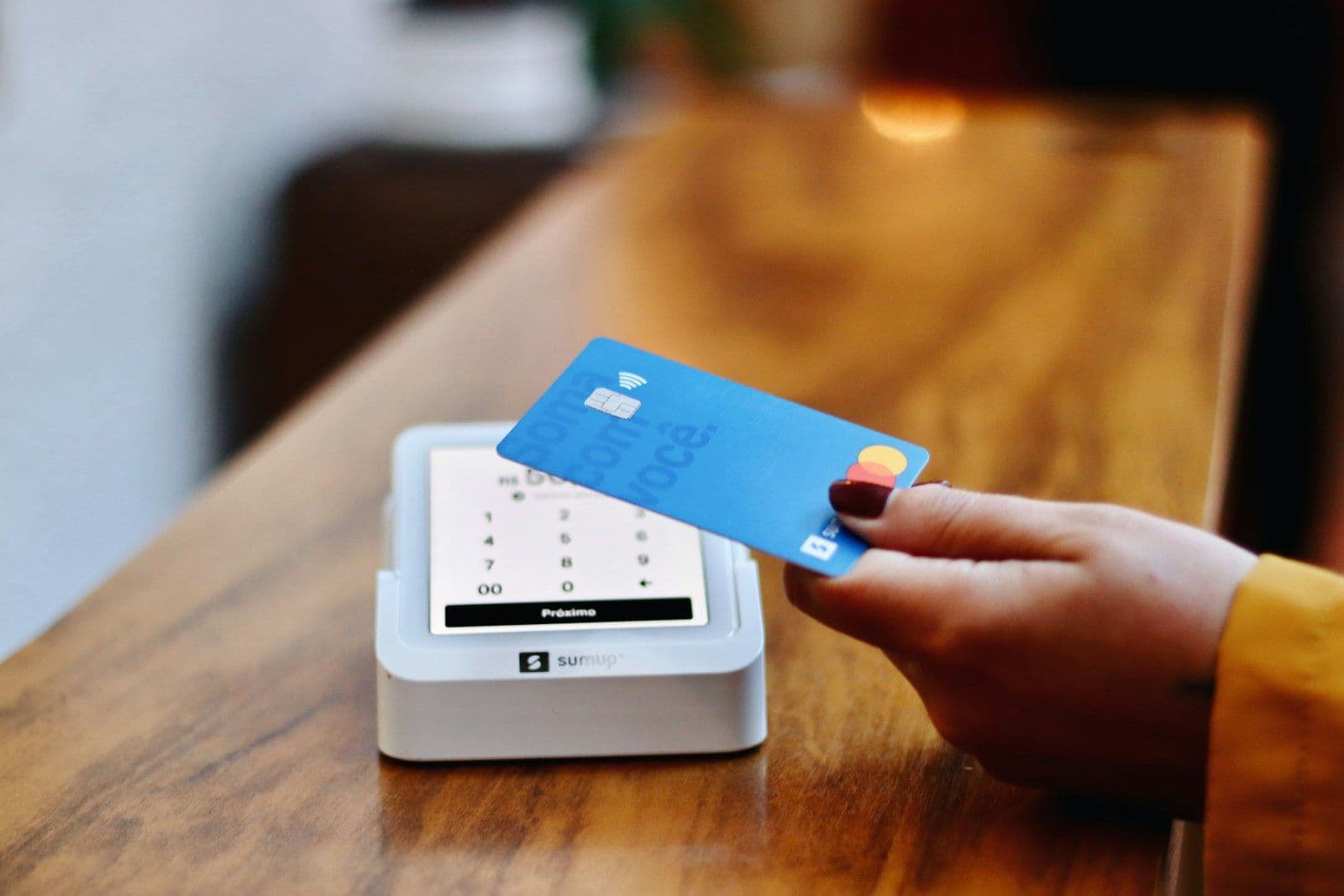
Going over a credit limit usually results in the transaction being declined, because federal law bars over-limit fees unless the cardholder has agreed to them in advance. If a cardholder has opted in, the purchase may go through and an over-limit fee can apply.
This protection comes from the Credit CARD Act. Under Regulation Z section 1026.56, a card issuer cannot charge an over-the-limit fee unless the consumer has affirmatively consented to over-limit transactions. What follows covers consumer credit cards, not charge cards with no preset spending limit or business cards, which can follow different rules.
The Credit CARD Act made the decline the default
Most cardholders never opted in, so the card is refused at the register and nothing else happens. A decline carries no fee and no direct score impact, and the card keeps working below the available limit.
Getting to the ceiling is rarely one purchase. The Federal Reserve found 45% of card owners carried a balance at least once in the prior twelve months (Federal Reserve, 2026), and on 13% of general purpose accounts in 2024 the year’s interest and fees exceeded what the cardholder paid toward principal (CFPB, 2025). On those accounts the balance climbs while it is being paid down. The limit does not climb with it.
Nothing announces the crossing. Interest posts on a cycle you do not watch, and pending authorizations such as a hotel hold or a gas station pre-authorization cut available credit days before the final charge clears. There is no alert, the statement has not arrived, and the first signal you get is a card refused at a register.
| Situation | Transaction | Over-limit fee |
|---|---|---|
| Not opted in | Usually declined at the register | Not permitted under federal law |
| Opted in | May be approved above the limit | An over-limit fee may apply |
Regulation Z makes your opt-in the switch for fees
The over-limit opt-in is your affirmative agreement to let an issuer approve transactions above the limit, in exchange for the possibility of a fee. Regulation Z, which implements the Truth in Lending Act, is where that consent requirement sits. Without it, the issuer declines and no fee is lawful.
You can opt in by phone, online, or in writing, and you can revoke that consent at any time. Because the statute makes silence a no, over-limit fees have become rare since the CARD Act took effect, and several large issuers stopped offering the program at all.
Regulation Z caps the fee below what you went over
Where a fee is allowed, Regulation Z limits it in two ways. There is a dollar safe harbor for a first violation and a higher one for a repeat violation in the same or the next six billing cycles, and separately the fee may not exceed the amount by which you went over the limit. Go $12 over and the fee cannot be more than $12.
The dollar figures are adjusted annually for inflation, which is why third-party pages disagree about them. Several widely cited sites still quote a first-violation figure that predates more than one adjustment. Read the number off your own cardholder agreement or the current CFPB rule text at Regulation Z section 1026.52(b) rather than a summary, because the cap that binds your issuer is the current one.
The second limit is the one worth remembering. It means a small overage cannot produce a large fee, and it holds regardless of which year’s safe harbor applies.
Utilization above 100% is what actually costs you
The fee is capped. The score damage is not, and that asymmetry drives everything below. Going over pushes credit utilization on that card above 100%, and utilization is one of the largest scoring factors, which is why a maxed card reads as strain to the model.
Context matters here. The average US credit card balance was $6,768 in 2025 (Experian, 2025), and 176.9 million consumers were carrying a card balance in the second quarter of 2026 (TransUnion, 2026). Plenty of those balances sit close enough to a limit that one unplanned charge crosses it.
The Consumer Financial Protection Bureau lists amounts owed among the main scoring factors, and the mechanics are in our guide to credit utilization.
| Term | What it means | What it does to utilization |
|---|---|---|
| Maxed out | Using nearly all available credit | Pushes toward 100% on that card |
| Over the limit | Balance exceeds the credit line | Above 100% on that card |
| High utilization | Reported balance high against the limit | The factor the model actually reads |
| Declined | The transaction never posted | No effect at all |
Maxing out and going over separate at the register
Maxing out means using nearly all of the available credit. Going over means exceeding it, which pushes that card past 100%. Both read as strain to a scoring model, and so does the behaviour underneath them: about 15% of general purpose cardholders made only the minimum payment in 2024, the highest share since at least 2015 (CFPB, 2025).
The practical difference shows up at checkout. A maxed card may still approve a small purchase where an over-limit attempt is typically refused, which is why the first sign of trouble is often a decline rather than a statement.
A penalty APR outruns the 25.2% average card rate
Some card agreements allow a penalty APR when a cardholder exceeds the limit, which raises the interest rate on the account. The penalty rate can apply to new purchases and, in some cases, to existing balances after proper notice.
This is the expensive outcome. Average APRs reached 25.2% on general purpose cards and 31.3% on private label cards in 2024, the highest levels since at least 2015 (CFPB, 2025), and a penalty rate sits above those. Issuers assessed consumers $160 billion in interest in 2024, up from $105 billion in 2022 (CFPB, 2025).
A penalty APR can persist through months of on-time payments before the original rate returns, which makes it far costlier than a one-time fee. Check whether your agreement lists over-limit spending as a trigger, alongside the standard rate covered in what APR means.
Issuers cut the line or close the account outright
Going over once is a declined card. Doing it repeatedly is a risk signal, and issuers act on it, the more so in a market where serious credit card delinquency stood at 12.8% of balances in the second quarter of 2026 (New York Fed, 2026). Our own read of the CFPB’s public Consumer Complaint Database shows what cardholders bring to the regulator: of the 95,511 credit card complaints recorded in the CFPB’s public Consumer Complaint Database between July 2025 and June 2026, 5.4% said the company closed their account and 9.4% were about fees or interest. These are unverified consumer allegations. An account that keeps crossing its ceiling can see its minimum payment raised, new purchases frozen, the credit line reduced, or the account closed outright.
A closure is the one with a tail. It removes that card’s limit from your total available credit, which raises utilization across every other card at once, and if it was an older account it takes its age off your file when it eventually drops.
Equifax, Experian and TransUnion only see the statement date
The bureaus generally see the balance reported on the statement date, whatever the balance was at the moment of the purchase. An overage that is paid down before the statement closes can leave no trace on the credit report at all.
That single mechanic is worth more than any of the advice below it, and it is covered in detail in our guide to statement date timing. Beyond it, a few habits keep spending under the ceiling:
- Opt out of over-limit coverage so transactions are declined instead of approved with a fee.
- Set a balance alert well below the limit, so a pending authorization does not catch you.
- Pay mid-cycle to free up available credit before the statement closes.
- Request a limit increase if higher spending is consistent and affordable.
Skip the paperwork. Lock in your spot.
CreditRefresh drafts your FCRA dispute letter and tracks the 30-day investigation window. You review, approve, and send. You stay in control.
Lock in your spotA higher limit cuts utilization only if the balance holds
A higher credit limit gives more room before spending hits the ceiling, and it lowers utilization at the same balance. Whether asking for one costs you anything is covered in our guide to whether a credit limit increase affects a score.
The benefit only holds if the balance stays where it was. A higher limit used as permission to spend more leaves utilization exactly where it started, and leaves the compounding in the opening section running against a bigger number.
The fee is small, and the reported balance is not
An over-limit fee is capped and cannot exceed what you went over. The utilization spike has no cap, the penalty APR has no cap, and a closed account takes its limit and its age with it.
So the order of operations is the opposite of what the fee suggests. Opt out so the card declines, watch the statement date, and treat a decline at the register as the system working.
Which tool helps you check the balance and limit on your reports
When a card is close to its limit, you need the report to show the right numbers. In our September 18, 2026 data, 20% of paying CreditRefresh members had revolving utilization of 75% or higher. Paying down a balance and disputing a wrong one are different jobs. Compare these tools on how they help you check the reports and act on an error.
| Tool | What you pay | What that buys | Bureaus | Trustpilot |
|---|---|---|---|---|
| CreditRefresh | $49.99/mo, no setup fee, cancel anytime. Mail letters yourself free, or pay RushMail per letter | Checks the balances and limits shown across all three reports and drafts letters for entries you choose to dispute. Monitoring lets you follow later changes. You read and sign each letter | All three | 4.3 (9 reviews) |
| Dispute Beast | From $49.99/mo for required monitoring. Mail letters yourself free, or pay Sprint Mail per letter | The dispute tool is free, the monitoring is not. Mail the letters yourself at no charge, or pay Sprint Mail per letter | All three | 4.2 (2,067 reviews) |
| DisputeBee | $49/mo personal, $129/mo business | Letter templates and a suggester. You print, mail, and log every bureau reply | All three | 3.2 (68 reviews) |
| The Credit People | $99/mo standard, $119/mo premium, or $599 for 6 months | Unlimited challenges and creditor interventions run for you. You never see the individual letters | All three | 1.7 (17 reviews) |
| Lexington Law | $139.95/mo, invoiced at the end of each service period | A law firm works your case. No self-serve tool | All three | 3.2 (624 reviews) |
| Credit Karma | Free, paid for by lender referrals | Scores, alerts, and card offers. Its dispute path reaches one bureau and drafts nothing | TransUnion | 1.1 (912 reviews) |
Every price is that company’s own published rate, read off that company’s own site on September 15, 2026. Trustpilot scores and review counts as published on September 24, 2026.
Watching your score can show that something changed, but you still need to check the reported balance and limit. New System, 1 star, June 21, 2026, on Credit Karma: “Paid off $5000 to get a 70 point drop. I paid off $5000 of debt. My credit cards went from fair usage to good usage and they dropped me 70 points with the recommendation to sign up for more cards. What a scam.” That review describes a score change, not its cause. The job here is to compare the entries with your records and challenge any that are wrong.
Check that your reports show the balance you actually owe with CreditRefresh
You may be working hard to bring a card balance down. A wrong limit or a balance that does not match your records gives you a separate problem to fix. CreditRefresh scans all three reports and drafts an FCRA letter for each entry you choose to dispute. You get a letter to act on while you keep working on the balance itself.
You can follow the disputed entries on later reports. In our September 18, 2026 member data, 47.9% of disputed items with a recorded outcome no longer appeared on a later report from the same bureau. Outcomes were recorded for 2.3% of items in mailed dispute rounds, across all dispute types. Monitoring also lets you check what balance and limit each bureau now shows.
Becca, a 5-star Trustpilot review, July 25, 2026: “it instantly pulled up my reports and flagged the things that were bringing down my credit score so that I could review and address those problem areas.” Jean L., a 5-star Trustpilot review, August 24, 2026, on our support: “The response time to my questions were very rapid and filled with complete/specific detailed instructions (not coined nor ‘auto-reply’).”
CreditRefresh is included with Refresh Monitoring at $49.99 a month. There is no setup fee, charge per dispute or contract, and you can cancel any time. You pick the entries to challenge and read and sign each letter before it is mailed.
Frequently asked questions
Does it hurt your credit score if you go over your limit?
It can, through utilization. There is no over-limit notation on a credit report. The balance pushes past 100% of the limit on that card, and that ratio is what the scoring model reads. The effect usually reverses within one or two billing cycles once a lower balance reports.
Is it really bad to go over your credit limit?
Once, accidentally, and paid down before the statement closes, it often leaves no trace. Repeatedly is different, because issuers respond by raising the minimum payment, cutting the line, or closing the account.
Is it okay to go over 30% of your credit limit?
30% is a rule of thumb, and the scoring model treats it as a slope. Scores generally improve as reported utilization falls below it. Crossing it on one card is far less serious than crossing 100%.
Can I go over my $1,000 credit limit?
Only if you have opted in to over-limit transactions. Without that opt-in the purchase is declined at the register, whatever the limit is.
How much is an over-limit fee?
It applies only if you opted in, it is capped by a Regulation Z safe harbor that is adjusted annually for inflation, and it can never exceed the amount you went over. Read the current figure off your cardholder agreement rather than a third-party summary.
Will my card be declined if I go over the limit?
Usually yes. Federal law makes opting in a precondition for both approving over-limit purchases and charging a fee, so a card with no opt-in is refused at the limit.
Does going over the limit show up on my credit report?
Not as its own mark. The high balance and the ratio it produces are what get reported, and that elevated utilization is what can move a score.
Last reviewed: September 2026
This article is for educational purposes only and does not constitute legal or financial advice. The Fair Credit Reporting Act and related regulations are complex, and outcomes depend on individual circumstances. Consumers with specific questions about their credit reports or rights under federal law should consult a licensed attorney or contact the Consumer Financial Protection Bureau directly.
CreditRefresh shows you the reported balance a lender actually sees, on all three bureaus, before it costs you a rate. Connecting your reports takes a few minutes, and the first scan is ready the same day.