
Issuers do not publish an approval-rate-by-score table. They do publish a recommended credit range next to most cards on the application page, and those ranges line up closely with the bands FICO publishes. Your score on a recent pull, plus your income, your existing card debt and how many cards you applied for lately, largely decide which of the cards below is worth an application. Approval is never guaranteed at any score. Card terms checked in April and September 2026; confirm the issuer’s current application disclosure before applying.
There is a second problem sitting under the first one, and it is the reason a lot of people get declined at a score they thought was safe. The score an issuer pulls comes off a credit file that may be wrong. The Federal Trade Commission’s congressionally mandated national accuracy study, the sixth and final one, found that one in five consumers had an error on at least one of their three credit reports and that for 5% the error was serious enough to raise the price they pay for credit. An account that is not yours, a balance that was paid, a late payment that never happened: each one sits in the file the issuer reads, and none of them announces itself. Before treating a band as a verdict, check what the band was built from.
FICO publishes five bands, and issuers underwrite against them
FICO divides the 300 to 850 scale into Poor below 580, Fair 580 to 669, Good 670 to 739, Very Good 740 to 799, and Exceptional 800 and up, with the Fair band described on myFICO as below the average score of U.S. consumers. FICO’s FICO Score Credit Insights Report, fall 2026 edition, put the average U.S. FICO Score at 714, down one point from July 2025 and below the record 718 set in April 2023, and records that FICO scores are used in about 90% of U.S. lending decisions. Those two facts together are why the bands function as gates: the same scale that sorts consumers is the scale nearly every issuer underwrites on.
Price moves with the band as well as access. The CFPB’s 2025 Consumer Credit Card Market report put the average APR at 25.2% for general purpose cards and 31.3% for private label cards in 2024, the highest levels since at least 2015, with the average APR on new general purpose accounts opened in 2024 at 27.5% against 19.8% ten years earlier. A card approved at the bottom of a band is not the same product as the same card approved at the top of it.
Credit Score Ranges Explained walks the full scale, and What Is a Good Credit Score in 2026? covers where the Good band sits against the current average.
Below 580, a refundable deposit is what makes approval possible
Secured cards are the realistic option under 580. The deposit becomes the credit line, which is how an issuer underwrites an applicant with a damaged file, a prior charge-off, or no score at all. Reported on-time payments build the same history an unsecured card would, and the deposit returns when the account closes in good standing or converts to unsecured.
The secured card market is smaller and tighter than the marketing suggests. The Federal Reserve Bank of Philadelphia’s Consumer Finance Institute, in its Secured Card Market Update of May 2024, built on loan-level Y-14M data from bank holding companies with $100 billion or more in assets, found the average credit limit on new secured cards fell from $482 in 2013 to $362 in 2022, that the share of new secured cards carrying a $200 limit rose from 18.1% in 2014 to 49.6% in 2022, and that the share with an APR of at least 25% rose from 2% in 2015 to 80% in 2022. The annual fee largely disappeared over the same period, from almost 100% of new secured cards in 2013 to 4% in 2022. The study covers the largest banks only, so it may not describe secured cards from credit unions or fintech issuers.
That same study is the best available answer to how long a deposit stays tied up. In its weighted vintage sample, almost 33% of borrowers with no credit score at origination had graduated to unsecured by month 12, against about 15% of borrowers who already had a score, and by month 30 about 50% against 29%; average time to graduate was about 13 months for unscored borrowers and about 15 months for scored borrowers. The deposit is released in full at graduation and the account’s history and opening date carry over.
Discover it Secured
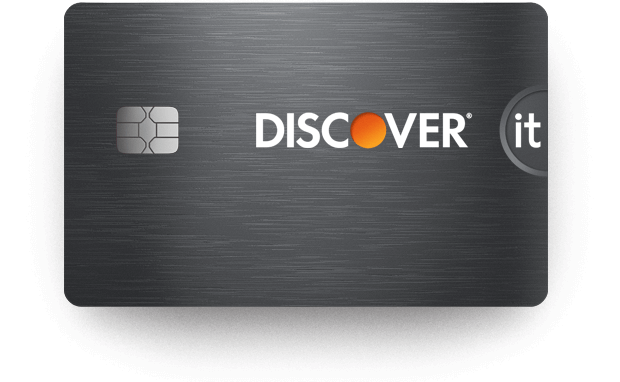
A secured card with cash-back rewards, which is unusual at this tier. Minimum security deposit $200, maximum $2,500. Annual fee $0. Published purchase APR 26.49% Variable. Rewards are 2% cash back at gas stations and restaurants on up to $1,000 in combined purchases each quarter, then 1% on everything else, and Discover matches all cash back earned in the first year. It fits this band because Discover’s published guidance lists Building Credit as the target audience, and deposit-backed underwriting means a damaged file does not block approval the way it would on an unsecured application.
Capital One Platinum Secured

A no-rewards secured card with a tiered minimum deposit of $49, $99 or $200 depending on Capital One’s evaluation, an initial credit line of at least $200 and a maximum of $1,000. Annual fee $0. Published purchase APR 28.99% Variable. No foreign transaction fees, as with every Capital One consumer card. It fits this band because the tiered deposit lets an applicant who cannot fund a full $200 open the account at all.
Secured Credit Cards: How They Work and When to Use One covers the deposit and graduation mechanics in full.
Fair credit between 580 and 669 buys thin unsecured offers
This is where issuers begin approving unsecured at scores of 580 and up, and the offers are thin: no rewards or small flat-rate cash back, often at the same APR a secured card carries. Approval here is more sensitive to income and recent inquiries than at higher bands, because fewer applicants clear the threshold on score alone. FICO places the whole 580 to 669 range in its Fair band and describes that band as below the average U.S. score.
Capital One Quicksilver Secured
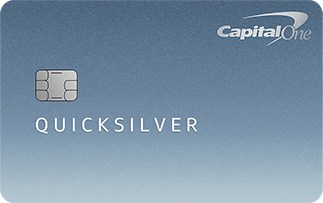
A secured card that earns flat-rate cash back, so an applicant in this band gets rewards on a deposit-backed path. Minimum deposit $200. Annual fee $0. Published purchase APR 28.99% Variable. Rewards are 1.5% cash back on every purchase, plus 5% cash back on hotels and rental cars booked through Capital One Travel. It fits this band as a step up from the Platinum Secured for someone who can fund the full $200 and wants rewards while the file recovers.
Capital One Platinum

The unsecured version of the Platinum Secured, built for the upper-Fair band. Annual fee $0. No security deposit. The purchase APR is Variable; Capital One assigns the rate at application and discloses the range in the cardholder agreement. No rewards. The card’s published credit guidance lists Average, Fair, Limited as the target, which corresponds to the 580 to 669 range. It fits as a bridge into Capital One’s rewards portfolio, since cardholders are typically reviewed for a line increase or an upgrade after a documented payment history.
Capital One QuicksilverOne Cash Rewards
Capital One lists QuicksilverOne for fair credit. It earns unlimited 1.5% cash back on purchases, charges a $39 annual fee, and lists a 28.99% variable purchase APR. Capital One says it automatically considers cardholders for a higher credit line in as little as six months. At 1.5% back, it takes $2,600 in annual purchases to earn $39 in rewards, before any interest. Compare that with a no-fee secured card if you can fund a refundable deposit.
Where to read the rate on any card at this band
Read the issuer’s application disclosure before applying. Credit card solicitations must disclose the applicable APRs under TILA Section 127 (15 U.S.C. 1637), and Regulation Z at 12 CFR 1026.6(b)(2) requires the account-opening table to show the APR and grace-period conditions. The offer on the application page governs the rate you may receive.
Good credit between 670 and 739 opens mainstream cash back
At 670 and up most applicants clear the issuer’s minimum score, so approval turns more on income and existing balance utilization than on the number itself. FICO’s Good band runs to 739, and the cards below are the common entry points to flat-rate and category cash back for that range.
Capital One Quicksilver
The unsecured flat-rate card that pairs with Quicksilver Secured. Annual fee $0. Published purchase APR 18.49% to 28.49% Variable, with a 0% intro APR for 15 months on purchases and balance transfers and a 3% balance-transfer fee during the intro period. Rewards are 1.5% cash back on every purchase and 5% on hotels and rental cars booked through Capital One Travel. No foreign transaction fees. The card’s published credit guidance lists Excellent, Good as the target, and the no-fee flat-rate structure makes it the default single-card choice for anyone who does not want to track categories.
Chase Freedom Unlimited
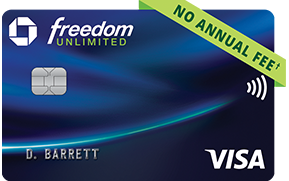
A hybrid flat-rate and category card. Annual fee $0. Published purchase APR 18.24% to 27.74% Variable, with a 0% intro APR period on purchases and balance transfers. Rewards are 1.5% cash back on all purchases, 3% on dining including takeout and eligible delivery, 3% on drugstore purchases, and 5% on travel booked through Chase Travel. Chase positions it as the entry product of the Freedom family, and its points convert to Ultimate Rewards once a cardholder also holds a Sapphire-tier product, which makes it a logical first card for someone planning to upgrade later.
Citi Double Cash
Citi’s Double Cash card has no annual fee and earns 1% cash back when you buy and another 1% as you pay for those purchases, with no category enrollment or rewards cap. Citi also offers a total of 5% on eligible hotels, car rentals and attractions booked through Citi Travel. The purchase APR depends on creditworthiness; Citi directs applicants to its pricing disclosure for the current range. It is the simpler flat-rate choice for someone who pays the statement balance and does not want to track bonus categories. Citi decides approval from the full application, not the FICO band alone.
The intro rate is a scheduled increase, not a penalty
One term to read carefully on any card with a 0% intro period. Regulation Z at 12 CFR 1026.55(b)(1) permits an issuer to increase the rate when a specified period of six months or longer expires, provided it disclosed the length of the period and the rate that would follow before the period began. Nothing is charged retroactively under that provision, and no delinquency is involved. That is a different rule from 12 CFR 1026.55(b)(4), which lets an issuer reprice a balance you already carry only after it has not received the required minimum payment within 60 days of the due date, and which requires the rate to come back down once the issuer receives six consecutive on-time minimum payments. What Is APR on a Credit Card, and When Does It Actually Apply? works through how those rates apply to a real statement.
At 740 and above, the question changes from whether to which
At 740 FICO’s Very Good band begins and Exceptional starts at 800. Premium travel and dining cards enter the comparison, though a score in this band does not guarantee approval. Their annual fees make the value of rewards and credits a spending decision.
Chase Sapphire Preferred
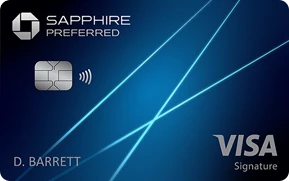
The standard mid-tier travel rewards card. Annual fee $95. Published purchase APR 19.24% to 27.49% Variable. Rewards are 5x points on travel purchased through Chase Travel, 3x on dining including takeout and eligible delivery, 3x on online grocery purchases excluding Target, Walmart and wholesale clubs, 3x on select streaming services, 2x on all other travel, and 1x on everything else. Cardholders get a 10% anniversary points bonus on the prior year’s spend and a $50 annual Chase Travel hotel credit. No foreign transaction fees. Ultimate Rewards points transfer to airline and hotel partners at 1:1, and the $95 fee is the price of admission to that network.
Capital One Venture X

A premium travel card with a $395 annual fee largely offset by a $300 annual Capital One Travel credit and a 10,000-mile anniversary bonus. Published purchase APR 19.49% to 28.49% Variable. Rewards are 10x miles on hotels and rental cars booked through Capital One Travel, 5x on flights and vacation rentals booked through Capital One Travel, and 2x on everything else. Unlimited Priority Pass lounge access plus Capital One’s own lounge network. No foreign transaction fees. It sits as the lower-fee alternative to the $795 Chase Sapphire Reserve, with a comparable lounge benefit and travel-credit structure at roughly half the annual fee.
American Express Gold
The American Express Gold Card has a $325 annual fee. It earns 4x Membership Rewards points at restaurants worldwide on up to $50,000 of annual purchases and 4x at U.S. supermarkets on up to $25,000, then 1x in each category. It also earns 3x on eligible flights booked directly with airlines or through American Express Travel. This is a dining and grocery card for a household whose spending can justify the fee; its credits have separate eligibility and enrollment terms. American Express reviews the full application and does not promise approval at 740.
The Platinum Card from American Express
The Platinum Card has an $895 annual fee. It earns 5x Membership Rewards points on eligible flights purchased directly from airlines or through American Express Travel, subject to a $500,000 annual purchase cap, and 5x on prepaid hotels booked through American Express Travel. Its value rests more on airport lounge access and travel credits than on everyday spending, which earns 1x. Compare the credits you will actually use against the fee before applying; the issuer’s offer and benefit terms govern eligibility.
Income, debt and inquiries decide the application the score only qualifies you for
The score is the threshold. What clears the application is the rest of the file, and this is where a reader who has done everything right still gets a denial.
- Income. Issuers must be able to conclude you can repay. The application asks for total household income, not just personal income.
- Debt-to-income. Existing minimum payments as a share of monthly gross income. The same score can clear at low DTI and fail at high DTI.
- Recent inquiries. FICO says a hard inquiry stays on a report for up to two years and that FICO Scores consider only inquiries from the last 12 months. FICO publishes two different point figures for a single inquiry across its own credit-education pages, less than five points on its Credit checks and inquiries page and an average of five to ten on its soft-versus-hard-pull page, so treat either as an average across files rather than a price your file will pay. FICO’s rate-shopping de-duplication, 45 days on recent versions and 14 on older ones, applies to student, auto and mortgage inquiries of the same type and does not cover credit card applications. VantageScore’s Complete Guide states that it treats all hard inquiries in a 14-day period as a single inquiry, with no loan-type restriction, so the card carve-out is a FICO rule.
- Stability. Time at current job and address, checked but weighted below income and DTI.
There is also a mechanical reason a strong score does not carry a strong balance. The CFPB’s 2025 Consumer Credit Card Market report found that the share of general purpose accounts in persistent debt, where the year’s interest and fees exceeded what the cardholder paid toward principal, rose to 13% in 2024 from 9.9% in 2022, and that about 15% of general purpose cardholders made only the minimum payment in 2024. A file in that condition reads as risk regardless of the three digits on top of it.
A denial entitles you to the report and the score behind it
This is the part almost nobody uses. Under the Fair Credit Reporting Act, Section 615(a) (15 U.S.C. 1681m(a)), a creditor that takes adverse action based in whole or in part on a consumer report must give you notice, name the consumer reporting agency with its address and telephone number, state that the agency did not make the decision, and tell you of your right to obtain a free copy of the report from that agency within 60 days and to dispute the accuracy or completeness of anything in it. Section 615(a)(2)(A) adds the numerical credit score, conditionally: the duty attaches where a numerical score was used, so a creditor that decided on judgmental or manual review owes you no score. The free-report half is unconditional.
That letter is the cheapest diagnostic in consumer credit. It names the bureau whose file sank the application, which tells you which of your three files to read first, and it opens a 60-day window to get that file at no charge. Disputing under the FCRA is a right that has existed since 1970; the hard part has only ever been knowing which item to challenge and where to send it.
Card complaints cluster on statements and reporting, not on approvals
Our own read of the complaints recorded in the CFPB’s public Consumer Complaint Database, covering 95,511 credit card complaints recorded from July 2025 through June 2026, found the leading issues within that set of 95,511 complaints were a problem with a purchase shown on your statement at 28.8%, incorrect information on your report at 11.7%, and getting a credit card at 11.5%. These are unverified consumer allegations, and a high count tracks company size as well as conduct; the CFPB does not confirm the facts alleged, and volume measures filing rather than harm. Reading the mix is still useful before you apply: the second-largest category is report accuracy, which is the thing that decides the application. For complaints received rather than published, the CFPB’s 2025 Consumer Response Annual Report records credit or consumer reporting at about 5.8 million of roughly 6.6 million complaints in 2025, 88% of the total.
Three things to do in the statement cycle before you apply
- Pay the statement balance rather than the minimum. The reported balance drives utilization. A $4,000 balance on a $10,000 limit reports at 40%; paying it to $1,000 before the statement closes reports at 10%. FICO weights amounts owed at 30% of a FICO Score, second only to payment history at 35%, and states that the weights describe the general population and vary with an individual profile.
- Space out applications. Chase’s documented 5/24 rule denies applicants who have opened five or more cards across any issuer in the prior 24 months. Issuers apply internal pacing rules of their own that they do not publish, so a denial can trace to a rule you cannot read.
- Pull the score the issuer will pull. Lenders usually see a FICO score; the free monitoring apps often show VantageScore. FICO publishes minimum scoring criteria of at least one account opened six months or more, at least one account reported to that bureau within the past six months, and no deceased indicator, while VantageScore’s Lender FAQs state that its model scores consumers the conventional models leave unscored. Two different models on two different files will not agree.
A score that has held steady for 90 days reads better than one that jumped 30 points last week, because underwriting may pull a slightly older snapshot. And if any of the items dragging the file are wrong, the fastest path is not waiting. How to Build Credit With No Credit History covers the other side of this problem, the file that is too thin to score at all.
Which tool can challenge errors behind your credit score before you apply
The decision here is not which card to want. It is what to do about the file standing between you and the card, and the tools split on a single question: can this thing act on all three bureau files, or does it only tell you what one of them says?
| Tool | What you pay | What that buys you before an application | Bureaus | Trustpilot |
|---|---|---|---|---|
| CreditRefresh | $49.99/mo, no setup fee, cancel anytime. Mail letters yourself free, or pay RushMail per letter | Scans all three reports, flags items that look inaccurate, incomplete, unverifiable or too old to report, and drafts a dispute letter for each one you choose to challenge | All three | 4.3 (9 reviews) |
| Dispute Beast | From $49.99/mo for required monitoring. Mail letters yourself free, or pay Sprint Mail per letter | AI-generated dispute rounds bundled with monitoring, with a training session to learn the tool | All three | 4.2 (2,067 reviews) |
| DisputeBee | $49/mo personal, $129/mo business | Letter templates and a suggester; you import the report, print, mail and upload the bureau responses yourself | All three | 3.2 (68 reviews) |
| The Credit People | $99/mo standard, $119/mo premium, or $599 for 6 months | Done-for-you disputes worked by staff after a phone evaluation; you do not see or sign the individual letters | All three | 1.7 (17 reviews) |
| Lexington Law | $139.95/mo, invoiced at the end of each service period | An attorney-backed firm files on your behalf; no self-serve tool and no guidance until you are a client | All three | 3.2 (624 reviews) |
| Credit Karma | Free, paid for by lender referrals | Score tracking and card offers with approval-odds estimates; its Direct Dispute reaches one bureau | TransUnion | 1.1 (912 reviews) |
Every price is that company’s own published rate, read off that company’s own site on September 15, 2026. Trustpilot scores and review counts as published on September 24, 2026.
What CreditRefresh does with the report an issuer is about to pull
The free apps are built to send you toward an application. Ours is built to look at the file first.
Eduardo F, in a 1-star Trustpilot review of Credit Karma on September 14, 2026, put the failure plainly: “Credit Karma gets people to apply for loans or credit cards with outstanding approval odds which I believe to be a complete lie. So they make me hurt your credit score with hard inquiries, when in actuality you have 0 approval odds, not outstanding.”
Here is what the files we see actually look like. In CreditRefresh’s September 18, 2026 analysis of paying-member data, 97.7% of paying members have at least one negative tradeline entry, and the average member carries 30 across the bureaus, with a median of 25. Those are bureau-level entries rather than 30 distinct debts, the same account can appear at more than one bureau, and a negative entry is not automatically inaccurate or disputable. Members’ VantageScore 3.0 averaged across the bureaus is 597, with a median of 594, and 66.4% average below 620. That is the Poor band, and it is where a card application turns into a hard inquiry and nothing else.
CreditRefresh reads all three reports, flags items that look inaccurate, incomplete, unverifiable or too old to be reported, and drafts a print-ready FCRA letter for each one you pick. You review and sign every letter before anything is mailed, and you send them yourself or hand a round to RushMail for a per-letter fee. The bureaus generally have about 30 days to investigate, and they decide the outcome; what happens to your score depends on the rest of the file. It is included with Refresh Monitoring at $49.99 a month, no setup fee and cancel anytime. Read the guarantee before you decide.
Frequently asked questions
What is the easiest credit card to get approved for?
A secured card, because the deposit rather than the score underwrites the account. The Philadelphia Fed’s Secured Card Market Update of May 2024 found 49.6% of new secured cards at the largest banks carried a $200 limit in 2022, so expect a small line to start. No card is guaranteed approval at any score, and issuers still verify income and identity.
What credit card will accept a 500 credit score?
A 500 sits in the Poor band FICO defines as below 580, where secured cards are the realistic path. Both Discover it Secured and Capital One Platinum Secured underwrite on the deposit. Capital One’s tiered $49, $99 or $200 deposit is the lower barrier if you cannot fund a full $200. Approval is never guaranteed at any score, and the issuer still reviews income, identity and the rest of the file.
Can I get a $1,000 credit card with bad credit?
A $1,000 line is possible on a secured card if you fund a deposit that size; Capital One Platinum Secured tops out at a $1,000 initial line and Discover it Secured accepts deposits up to $2,500. On unsecured cards at that band the Philadelphia Fed data points the other way, with average new secured card limits at $362 in 2022. Issuers set the line, and nothing here predicts what you will be offered.
What credit card has a $2,000 limit for bad credit?
We have not found a card that publishes a $2,000 line as a starting limit for the Poor band. A secured card funded with a $2,000 deposit is the mechanism that reaches that number, and Discover it Secured accepts deposits up to $2,500. Read the fee schedule before accepting an unsecured offer that promises a high limit at a low score.
Is 300 a bad credit score?
300 is the bottom of the FICO scale, and FICO places anything below 580 in the Poor band. A file has to meet minimum criteria to be scored at all: at least one account opened six months or more, at least one account reported to that bureau within the past six months, and no deceased indicator. If you are seeing 300 on an app, verify it is a real score on a real file rather than a placeholder.
What disqualifies you from getting a credit card?
Insufficient verified income, a debt-to-income ratio the issuer will not carry, recent delinquencies, a thin or unscorable file, too many recent accounts under an issuer rule like Chase’s 5/24, and prior charge-offs with that same issuer. None of those is a score, which is why an application can fail at a score the card’s page recommends.
Does applying and getting denied hurt my score?
The application creates a hard inquiry whether or not you are approved. FICO says a hard inquiry remains on a report for up to two years and affects FICO Scores for 12 months, and publishes point estimates of under five points on one of its pages and an average of five to ten on another. The denial itself is not reported, but the inquiry is.
Can I see why I was denied?
Yes. Under FCRA Section 615(a) the creditor must send an adverse action notice naming the consumer reporting agency it used, stating that the agency did not make the decision, and telling you of your right to a free copy of that report within 60 days and to dispute anything inaccurate or incomplete. Section 615(a)(2)(A) requires the numerical score only where a numerical score was used.
CreditRefresh does not sell cards. It reads the three reports an issuer is about to pull and flags what looks wrong before you apply, which is the part of the application you can still change. Connecting your three reports takes a few minutes, and the first scan is ready the same day.