
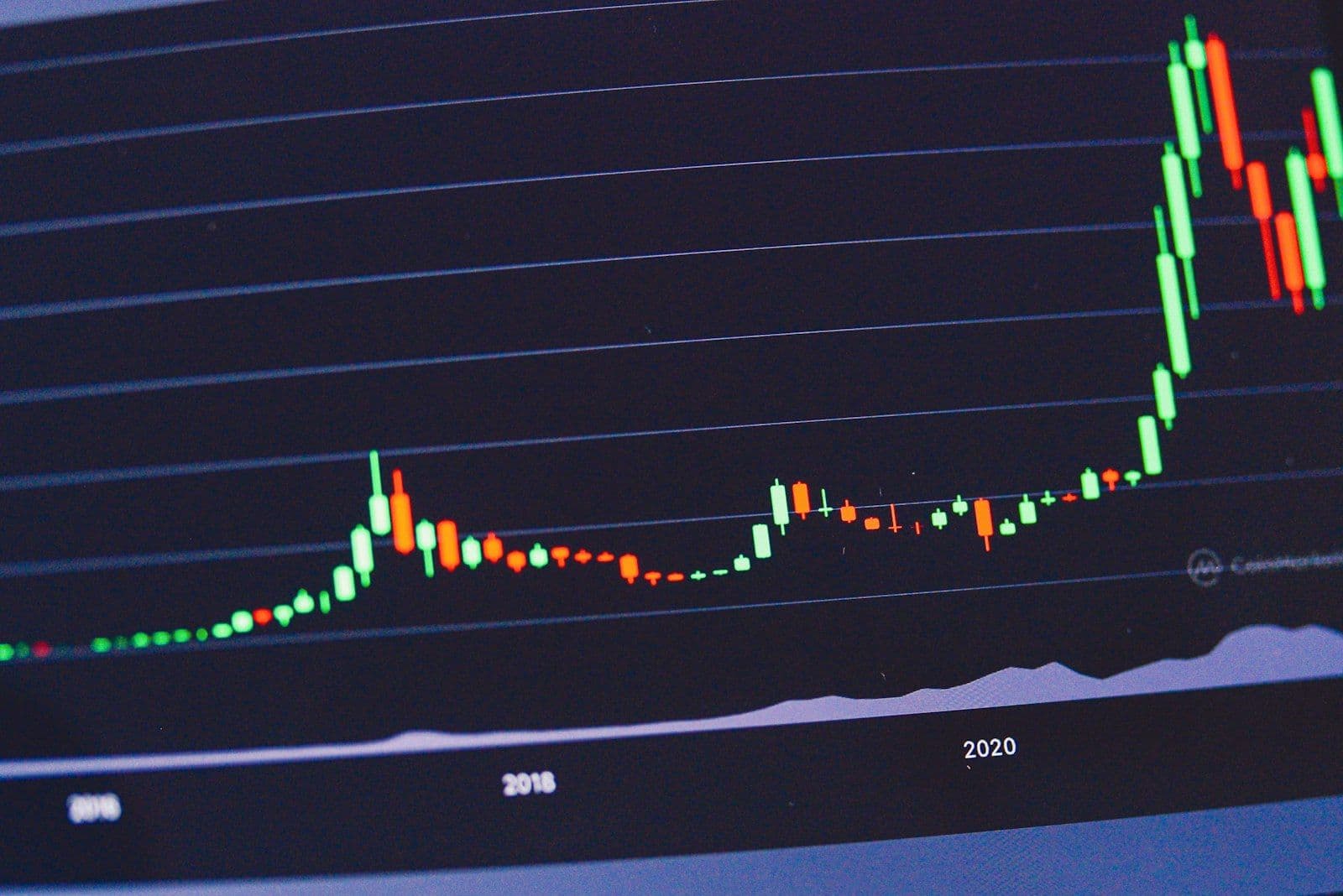
Most people treat a credit score like a photo. Pay the card down the month before you apply, and the picture looks better. FICO 10 T was built to see past that move: it reads 24 months of your balances and payments and scores the direction you are heading.
That makes it a tougher grader, and a harsher one when the data is wrong. A bad balance reported once is a blip, but the same bad balance reported for two years is a trend, and trends are what FICO 10 T scores.
What is trended credit data?
Trended credit data is the month-by-month record of what you owed, what you had to pay, and what you actually paid on each account over the prior 24 months. It shows how your habits changed over time. Two people can look identical on a single day and look nothing alike once you line up two years of their statements.
Take one person paying the minimum on a balance that keeps growing. Now take another paying well over the minimum on a balance that keeps shrinking. In a snapshot they can look the same, and the trended view shows the difference clearly.
Each month of trended data captures:
- The total balance at the end of the billing cycle.
- The minimum payment due.
- The actual payment made.
- The credit limit in effect at the time.
- The account status, such as current, late, or some other state.
- Any interest charges, fees, or other adjustments that month.
How does FICO 10 T differ from earlier FICO versions?
Earlier FICO versions score one snapshot of your report. They look at the latest balance, the credit limit, and the other fields as they stand on the day of the pull. The only history they see is what the report already carries, like how many late payments you had and how recent they were. FICO 10 T adds the trended layer on top and reads patterns across the prior 24 months.
The score still reads the same way. FICO 10 T keeps the familiar 300 to 850 range, with cutoffs much like the older versions, so a lender or borrower does not have to relearn what a number means.
| What changes | FICO Score 8 | FICO Score 9 | FICO 10 | FICO 10 T |
|---|---|---|---|---|
| Data it reads | Single snapshot | Single snapshot | Single snapshot | 24 months of trended history |
| Score range | 300 to 850 | 300 to 850 | 300 to 850 | 300 to 850 |
| Paid collections | Counted | Left out if paid | Left out if paid | Left out if paid |
| Personal loans | Generic treatment | Sharper treatment | Sharper treatment | Sharper treatment |
| Rent and utility payments | Left out | Counted if reported | Counted if reported | Counted if reported |
| Weight on recent habits | Moderate | Moderate | Higher | Highest |
| Main use today | Most consumer lending | Auto and some mortgage | Newer lender rollouts | Mortgage and select lending |
We stick to FICO 10 T here. VantageScore 4.0 also uses some trended data, but its method is different, and our guide to FICO Score vs VantageScore: The Real Differences walks through it. Mortgage underwriting also weighs more than the score itself, so treat the score as one input a lender reads.
How does trended data affect the credit score?
Trended data hits hardest on credit utilization and on how the model judges the way you handle debt. Someone who pays balances down month after month reads as lower risk than someone whose balances climb, even when both sit at the same utilization today. Two people at 30% utilization can land on different FICO 10 T scores because of where they started.
The person whose utilization has been falling for 24 months scores higher than the person who has been climbing toward 30% from a lower start. That matters more now that card debt keeps rising. U.S. credit card balances reached $1.26 trillion in the second quarter of 2026 (New York Fed, 2026). If utilization is new to you, Credit Utilization Explained covers the basics, and What Affects Your Credit Score? The 5 Factors Explained shows where it fits among the other factors.
Patterns that help a FICO 10 T score:
- Monthly payments well above the minimum, which shows you are paying debt down.
- Balances that fall over time, especially on credit cards.
- Low, steady utilization, with the odd spike for a big purchase that gets paid off fast.
- Paying the full statement balance so no interest builds.
- Low utilization held for years alongside on-time payments.
- Paying extra on installment loans too, which shows you are on top of your money.
Patterns that hurt a FICO 10 T score:
- Minimum-only payments month after month, especially on growing balances.
- Utilization that keeps rising, even if today’s level looks moderate.
- Frequent cash advances or balance transfers, which can signal money stress.
- Charging the card right back up after each payment, which suggests you lean on credit for daily bills.
- Maxing out cards some months and paying them down in others, with no steady progress.
What does FICO 10 T see when two borrowers look the same today?
FICO 10 T sees the path each borrower took to today’s balance. A single-snapshot score sees only where they stand. Here is how the same day can read five different ways once the model looks back 24 months.
The steady payer. Balances have dropped a little almost every month for two years. The trend says this person is paying debt down, and the model reads that as lower risk.
The last-minute payer. Balances ran high for most of two years, then got paid down the month before the application. FICO 8 and FICO 10 T both give credit for the low balance, but FICO 10 T still sees the 23 months before it.
The climber. Utilization sits at 30% today, up from a much lower level a year ago. The current number looks fine, and the direction is what FICO 10 T flags.
The charge-and-reset borrower. The card gets paid off, then charged right back up, cycle after cycle. The trend points to leaning on credit for everyday costs.
The borrower with a reporting error. A lender keeps reporting a balance that was already paid off, or a credit limit lower than the real one. Every month the error repeats, it becomes part of the 24-month trend. The model scores a debt pattern that does not match what this person actually did.
That last case is the one most guides skip, and it is the one you can do something about.
What happens when a wrong balance repeats for 24 months?
FICO 10 T reads trended data covering the previous 24 months or longer, so a wrong balance reported every month becomes a false trend, and the model scores it like a real one. Errors are common. One in five consumers had an error on at least one of their three credit reports in the FTC’s national accuracy study (FTC, 2013).
The complaint record points the same way. Of the 5,861,954 complaints about credit reporting or other personal consumer reports recorded in the CFPB’s public Consumer Complaint Database from July 2025 through June 2026, 59.4% were about incorrect information on a report, by our count of the public data. Improper use of a report came next at 21.6%, then problems with a company’s investigation at 18.2%. These complaints are unverified consumer allegations.
The law puts the accuracy duty on the lenders who send the data. Trended data was added to the Metro 2 credit reporting format under industry guidelines kept by the Consumer Data Industry Association. The furnishing rules for trended data are not set directly by statute. The reporting system they run on sits inside the rules of 15 U.S.C. § 1681s-2, which requires furnishers to report accurate and complete account information. Trended data is sent alongside the standard monthly snapshot and follows the same accuracy and integrity rules.
You have the right to challenge it. Under FCRA Section 611, a bureau that gets your dispute must run a reasonable reinvestigation, generally within 30 days, and correct or delete what it cannot verify (FCRA, 1970). Each of the three bureans, Equifax, Experian and TransUnion, keeps its own file, so an error at one needs a dispute at that one.
Why are mortgage lenders adopting FICO 10 T?
Mortgage lenders are moving to FICO 10 T because the housing finance regulators told them to. The Federal Housing Finance Agency announced in 2022 that Fannie Mae and Freddie Mac would adopt FICO 10 T and VantageScore 4.0 as required scoring models for mortgages. That replaces the Classic FICO models that set the standard for decades. The goal is to widen mortgage access by picking up signs of good credit that a single snapshot misses.
The bar for a mortgage keeps moving too. Fannie Mae’s Desktop Underwriter moved from a hard 620 minimum score to a broader credit-risk review, effective November 15, 2025 (Fannie Mae, 2025). A broader review reads more of your file, which is exactly where 24 months of trended data comes in.
Borrowers who do get approved have strong files. The median FICO score at origination for owner-occupied purchase loans rose to 750 as of January 2026 (Urban Institute, 2026).
The rollout runs in steps:
- FHFA announces the change and sets the rules for Fannie Mae and Freddie Mac.
- Fannie Mae and Freddie Mac update their automated underwriting systems to accept the new score.
- Lenders update their loan systems to pull FICO 10 T alongside or in place of Classic FICO.
- Lenders adjust their pricing and approval rules to the new score spread.
- Borrowers see FICO 10 T scores on adverse action notices and risk-based pricing disclosures under FCRA Section 615.
- Older FICO versions carry on alongside FICO 10 T for non-mortgage lending until other lenders switch too.
How can a consumer build a strong FICO 10 T profile?
Steady habits over two years build a strong FICO 10 T profile, because the model reads 24 months of behavior. A quick fix before the application barely moves a trend. Minimum payments are the habit to break first. 15% of general purpose cardholders made only the minimum payment in 2024, the highest share since at least 2015 (CFPB, 2025).
Habits that build the profile:
- Pay credit cards in full each month so no balance carries and no interest builds.
- Keep utilization below 10% of the limit on each card, every month.
- Skip the loop of charging the card up and paying it to zero over and over within a cycle.
- Pay more than the minimum on installment loans when you can, so the principal drops faster.
- Avoid opening several new accounts close together, which can look like credit-seeking.
- Keep accounts in good standing for long stretches, since trended data rewards consistency.
What should you do in the 24 months before a mortgage application?
Start two years out, because that is how far back FICO 10 T reads. A borrower who begins the month before applying is working on one data point out of 24. Here are seven steps, in order.
- Pull all three reports now. Get your Equifax, Experian and TransUnion reports two years ahead of time. You want the full window of time to catch problems.
- Dispute any wrong balance, limit, or status. Check every monthly field that feeds the trend. A wrong limit makes utilization look higher every single month it sits there.
- Keep utilization under 10% every month. One good statement does not fix a trend. Our guide on How to Lower Credit Utilization lays out the moves.
- Pay more than the minimum. Minimum-only payments on a growing balance are the pattern FICO 10 T punishes most.
- Break the charge-and-reset loop. Pay a card down and leave it down. Charging it right back up reads as leaning on credit.
- Stop applying for new credit. Each application adds a hard inquiry, and offers that promise good odds do not always deliver. Eduardo F, in a 1-star Trustpilot review of Credit Karma dated September 14, 2026, wrote: “Credit Karma gets people to apply for loans or credit cards with outstanding approval odds which I believe to be a complete lie. So they make me hurt your credit score with hard inquiries, when in actuality you have 0 approval odds, not outstanding.”
- Keep old accounts open and current. Long, clean history is the steadiest trend you can show.
Does trended data affect the credit report itself?
No. Trended data changes how your report is scored, and the report itself stays the same. The data sits in your credit file but does not appear in the standard disclosures you get under FCRA Section 1681g. Those disclosures show the current snapshot and the payment history grid. They leave out the month-by-month balance, minimum payment, and actual payment data that FICO 10 T uses.
You can ask each bureau for a fuller disclosure that includes trended data, though it is hard to use for a personal review. The data does most of its work as input to the scoring model. If you are worried about how your trended data will score, focus on the habits it captures, and make sure the monthly balances and limits on your standard reports are correct.
When will FICO 10 T be used outside mortgage lending?
Mortgage lending adopted FICO 10 T first, and other lenders can use it too. FICO scores are used in 90% of U.S. lending decisions (FICO, 2026), so a shift in which version lenders pull reaches almost every borrower. Auto lenders, card issuers, and personal loan lenders may adopt FICO 10 T over the next several years as their systems support it and as mortgage adoption puts pressure on them.
Older FICO versions will stay in use alongside FICO 10 T for years. Lenders have put a lot of money into their current scoring systems, and moving to a new model takes testing, adjusting, and regulatory approval. New models usually arrive slowly, with older ones still used for existing accounts and applications already under way.
Which Tool Gets a Wrong Balance Checked Before a Mortgage Pull?
Under FICO 10 T, the choice turns on who finds a bad balance in your 24-month history and who gets a dispute to each bureau that reports it. Here is how the options compare on price, on what the money buys for that job, and on how many bureaus each one reaches.
| Tool | What you pay | What that buys | Bureaus | Trustpilot |
|---|---|---|---|---|
| CreditRefresh | $49.99/mo, no setup fee, cancel anytime. Mail letters yourself free, or pay RushMail per letter | Scans all three reports, drafts an FCRA letter per flagged item, you sign each one | All three | 4.3 (9 reviews) |
| Dispute Beast | From $49.99/mo for required monitoring. Mail letters yourself free, or pay Sprint Mail per letter | AI dispute letters bundled with paid monitoring and FICO 8 scores | All three | 4.2 (2,067 reviews) |
| DisputeBee | $49/mo personal, $129/mo business | Letter software; you import reports, then print, mail and track replies yourself | All three | 3.2 (68 reviews) |
| The Credit People | $99/mo standard, $119/mo premium, or $599 for 6 months | Done-for-you service; you do not see or approve each letter | All three | 1.7 (17 reviews) |
| Lexington Law | $139.95/mo, invoiced at the end of each service period | Attorney-backed service that files for you; individual letters are not shown | All three | 3.2 (624 reviews) |
| Credit Karma | Free, paid for by lender referrals | Free score tracking; Direct Dispute reaches TransUnion only, with no drafted letters | TransUnion | 1.1 (912 reviews) |
Every price is that company’s own published rate, read off that company’s own site on September 15, 2026. Trustpilot scores and review counts as published on September 24, 2026.
How CreditRefresh Checks All Three Reports Before a Wrong Balance Becomes a Trend
Under FICO 10 T, a wrong balance counts against you every month it stays on the file, so the job is to find it early and get it checked. In CreditRefresh’s September 18, 2026 member-data extract, 2.3% of disputed bureau-level items in mailed rounds had a recorded outcome. Within that subset, 47.9% were no longer reported on a newer pull of the same bureau, while 52.1% remained reported with a changed balance, status or negative flag.
The work is real for the people who use us. Our members’ mailed dispute rounds average 23.6 disputed bureau-level items, and that is a lot of monthly fields to check by hand across Equifax, Experian and TransUnion. CreditRefresh pulls all three reports and flags items that look inaccurate, incomplete, unverifiable, or too old to report. It drafts a tailored FCRA dispute letter for each one you choose, and nothing goes out until you review and sign it. You mail the round yourself or hand it to RushMail for a small per-letter fee, then track each bureau’s reply against the roughly 30-day window. The bureaus decide every outcome, and accurate items stay on your report.
It comes with Refresh Monitoring at $49.99 a month, with no setup fee, no per-dispute charge, and no contract. There is nothing to learn and no training session. Members who work the full program are also covered by our 100% money-back guarantee.
Frequently Asked Questions
Does FICO 10 T have a different score range?
No. FICO 10 T uses the same 300 to 850 range as earlier FICO versions, with similar cutoffs for excellent, very good, good, fair, and poor credit. The biggest score differences land on people whose recent habits look very different from their older history.
Can I get a FICO 10 T score from a free service?
Not easily yet. Most free services show FICO Score 8 or VantageScore 3.0, and you can reach FICO 10 T through paid services from myFICO and similar providers, or through adverse action notices and risk-based pricing disclosures from lenders that use it. 9 Credit Scores You Didn’t Know You Had explains why the number you see and the number a lender pulls can differ.
Does paying off a credit card help FICO 10 T more than FICO 8?
Yes, when the paydown is part of a steady pattern. A paydown the month before scoring helps about the same in both models, but 12 months of steady paydown earns more credit in FICO 10 T, because FICO 8 cannot tell a lasting paydown from a one-time dip.
Does FICO 10 T penalize personal loan use?
No. FICO 10 T treats personal loans the way FICO 9 and FICO 10 do, reading the loan in the context of your whole profile. A loan that pays off card debt can help by lowering revolving utilization, but only if the cards stay paid down, and trended data shows whether they did.
Will older FICO versions be retired?
Eventually, but not soon. FICO Score 8, launched in 2009, is still the most widely used version in 2026 despite FICO 9, FICO 10, and FICO 10 T, because lenders decide when to switch. Expect older versions to shape your credit access for several more years.
How many mortgage lenders use FICO 10 T right now?
The switch happens lender by lender, so there is no single date when every mortgage runs on FICO 10 T. Fannie Mae and Freddie Mac update their systems first, then each lender updates its own loan software and pricing, which is why older Classic FICO scores still appear alongside the new one.
Does rent count toward a FICO 10 T score?
Yes, when it is reported. FICO 10 T, like FICO 9 and FICO 10, can count rent and utility payments that show up on your credit file, so steady on-time rent reported to a bureau becomes part of your history.
Last reviewed: May 2026
This article is for educational purposes only and does not constitute legal or financial advice. The Fair Credit Reporting Act and related regulations are complex, and outcomes depend on individual circumstances. Consumers with specific questions about their credit reports or rights under federal law should consult a licensed attorney or contact the Consumer Financial Protection Bureau directly.
CreditRefresh finds the wrong balances on all three of your reports and drafts the FCRA letter for each, so your 24-month FICO 10 T trend is built on correct data. Backed by a 100% money-back guarantee.