
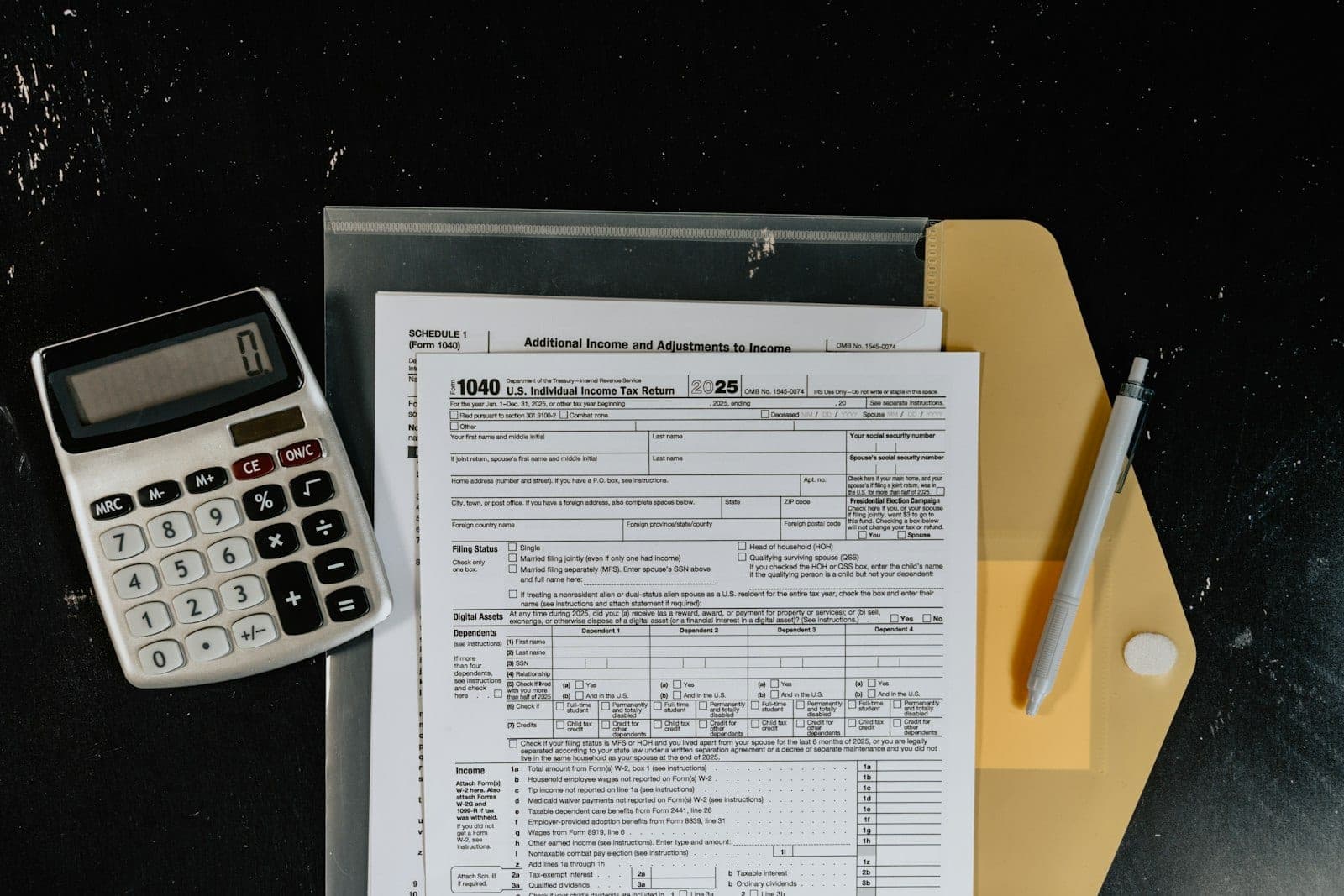
Settling a collection account feels like the end of it. You sign, you pay the lower number, the calls stop. Then a tax form arrives and tells you the part you did not pay is now income.
That is the default rule, and it catches a lot of people. About 77 million Americans have debt in collections on their credit report (Urban Institute, 2025), and every settlement among them raises the same question months later. Forgiven debt is taxed unless an exclusion applies, and the paperwork does not end when the collector stops calling.
Here is the short answer. Forgiven or settled debt can count as taxable income. When a creditor cancels $600 or more, it files Form 1099-C, and you generally report that amount as cancellation of debt income on your federal return. Exclusions exist, but the default is that canceled debt is taxed. The result can be an unexpected bill in the year the debt is forgiven, even when no cash ever changed hands.
The Internal Revenue Code treats a discharged debt as income because the borrower kept money that no longer has to be repaid. The IRS explains this in Topic No. 431, and the creditor documents the event on Form 1099-C.
What follows covers the federal tax treatment of canceled consumer debt. It does not address state income tax, business debt, or the details of any individual return, and it is not a substitute for advice from a tax professional.
Why is forgiven debt treated as income?
A borrower who no longer owes a balance has received value equal to the canceled amount. The tax code counts that benefit as income, the same way it counts wages or interest, unless Congress has carved out a specific exception for the situation.
This catches many people off guard after they settle a collection account expecting relief instead of a tax bill. The settlement does end the debt. Yet the forgiven part can resurface months later as a line on the return for the year the cancellation happened.
The amount at stake can be sizable. A $6,000 forgiven balance added to taxable income can raise a tax bill by a four-figure sum, depending on the household’s bracket. That is why the tax side deserves a look before a settlement is signed.
What is a 1099-C and when is one issued?
Form 1099-C, Cancellation of Debt, is the form a creditor files when it discharges $600 or more. The IRS instructions for Form 1099-C require an applicable entity, such as a bank or major lender, to send a copy to both you and the IRS.
The $600 threshold applies per creditor. Settling several accounts in one year can produce several separate forms. Box 2 shows the canceled amount, which is principal and sometimes accrued interest. Box 1 shows the date of the identifiable event that triggered the cancellation.
A form usually arrives early in the year after the cancellation, alongside your other tax documents. The creditor reports the same figure to the IRS. Leave it off your return and you are inviting a later notice.
Do you still report canceled debt under $600?
Yes. The $600 line decides whether the creditor has to file a form. It does not decide whether the income counts.
A creditor that forgives $450 may send nothing at all. The canceled amount is still cancellation of debt income under the same rule, and it still belongs on the return unless an exclusion covers it. No form in the mailbox is not the same as no tax.
This matters most for people who settled several small accounts in one year. Each one sits under the threshold. Together they can add up to real income that no form ever flagged.
Does settling a debt for less always trigger taxes?
Not always, but it often does. When a collector accepts $4,000 on a $10,000 balance, the $6,000 difference is canceled debt and can be reported as income. Whether tax is actually owed then depends on whether an exclusion such as insolvency applies to you.
This tax consequence is one reason to weigh settlement against the alternatives before committing. A comparison of settlement versus consolidation shows how each path affects both your credit and the total cost you end up paying.
Timing matters too. Tax is generally owed for the year the debt was canceled, which is often years after the debt was taken on. A settlement late in one year and a forgiveness early in the next land in different filing periods.
What is the insolvency exclusion?
Insolvency is the most common way people avoid tax on canceled debt. You are insolvent when your total liabilities exceed the fair market value of your total assets immediately before the cancellation. The amount you can exclude is capped at the size of that gap.
- Add up all liabilities, including the debt about to be canceled, the moment before discharge.
- Add up the fair market value of all assets, including bank balances, retirement accounts, and property.
- If liabilities exceed assets, that difference is the amount of insolvency.
- Cancellation of debt income can be excluded up to that insolvency amount by filing Form 982.
Many people who settle debt are insolvent at the time, because they owe more than they own. That is usually why they settled. Careful records of assets and liabilities on the cancellation date are what back up the exclusion if the IRS later asks for proof.
Which canceled debts are not taxable?
Several kinds of canceled debt fall outside taxable income entirely. They matter because they can turn an alarming 1099-C into no extra tax at all, as long as the right form goes in with the return and the facts hold up.
- Bankruptcy. Debt discharged in a Title 11 bankruptcy case is excluded from income. That covers a lot of households: debtors filed 557,376 bankruptcy petitions in 2025, a 10.6% increase over 2024 (Administrative Office of the U.S. Courts, 2025).
- Insolvency. Cancellation is excluded to the extent you were insolvent just before it, as set out above.
- Certain student loans. Some student loan forgiveness and discharge programs are excluded by statute, including certain public service programs.
- Some mortgage debt on a main home. Forgiven debt used to buy, build, or improve a principal residence has had its own exclusion, with limits and dates Congress sets. Check the current year’s rules in IRS Publication 4681 before you count on it.
- Farm and real-property business debt. Some qualified farm debts and real-property business debts get special treatment.
Each exclusion has its own conditions. You claim it on Form 982 by checking the box that fits your case. Claim the wrong category, or claim one that does not apply, and a correction notice can follow. Bankruptcy also takes priority: if the debt was discharged in a bankruptcy case, that box applies before insolvency does.
What happens with a foreclosure, repossession, or abandonment?
Losing the property does not always end the loan. When a lender forecloses on a home or repossesses a car and the sale brings in less than you owe, the leftover balance is a separate question. If the lender cancels that leftover amount, it is canceled debt like any other.
Repossession is more common than people think. In December 2022, 0.75% of all outstanding auto loans in the CFPB’s auto finance data pilot were delinquent enough for the lender to send the car out for repossession (CFPB, 2025). That figure comes from 2022 pilot data, the most recent the CFPB has published at that level of detail.
The same logic runs through abandonment, where you walk away from property that secured a loan. The IRS covers all three events in Publication 4681, Canceled Debts, Foreclosures, Repossessions, and Abandonments. Two steps are worth knowing. First, the lender may still be chasing the leftover balance, in which case nothing has been canceled yet. Second, a sale can create its own gain or loss on the property, apart from any canceled debt. Both are good reasons to bring the lender’s paperwork to a tax professional.
How do settled, forgiven, and charged-off debts differ for taxes?
The three terms describe different events, and only some of them create a tax bill. Knowing the difference prevents a surprise tax bill. It also stops the opposite mistake, assuming every negative account on your report means a 1099-C.
| Status | What it means | Tax consequence |
|---|---|---|
| Settled | Creditor accepts less than the full balance | Forgiven portion may be taxable income |
| Forgiven | Creditor cancels the remaining balance | Generally taxable unless an exclusion applies |
| Charged off | Creditor writes the debt off its books | No tax until the debt is actually canceled |
One account can pass through more than one of these stages. A balance can be charged off, then later settled or forgiven. Only the cancellation step raises the tax question. The charge-off does not.
Does a charge-off create a 1099-C?
Not by itself. A charge-off is an accounting step a creditor takes after about 180 days of nonpayment. The debt usually still exists and can be collected or sold to a debt buyer. A 1099-C is issued only when the creditor identifies an event that actually discharges the obligation.
Because the two are separate, a charged-off account can sit on a credit report for years without any tax form. Then it can generate a 1099-C later, if the creditor formally cancels the remaining balance.
Skip the paperwork. Lock in your spot.
CreditRefresh drafts your FCRA dispute letter and tracks the 30-day investigation window. You review, approve, and send. You stay in control.
Lock in your spotThis is also why a 1099-C does not always line up with recent activity. A form can arrive long after the last payment, reflecting the year the creditor finally decided to close out the debt for good.
What should you do after receiving a 1099-C?
Do not ignore it. The IRS gets its own copy and will expect the amount on your return. A calm, documented response protects you from penalties for underreporting. It also protects you from overpaying tax that an exclusion would have erased.
- Confirm the canceled amount and the cancellation date against your own records.
- Decide whether an exclusion such as insolvency or bankruptcy applies to you.
- File Form 982 with your return to claim any exclusion that fits.
- Talk to a tax professional when the amount is large or the facts are unclear.
Keep the 1099-C with that year’s tax records even when an exclusion erases the tax. The paperwork explains why the reported income never reached your final bill, if a question ever comes up.
Can a 1099-C be wrong or issued in error?
Yes. A form can list the wrong amount, arrive for a debt that was never canceled, or show up after the debt was already discharged in bankruptcy. Wrong amounts are a common complaint in collections generally: 91% of 2024 debt collection complaints about false statements concerned attempts to collect the wrong amount (CFPB FDCPA Annual Report, 2025).
If you believe a form is wrong, contact the creditor in writing and ask for a corrected version. The Consumer Financial Protection Bureau accepts complaints about improper debt collection conduct.
An old debt that resurfaces can also raise questions about timing and ownership. Reviewing the statute of limitations on the debt helps you understand what a collector can still legally pursue before you respond to a late or unexpected cancellation notice.
Does a 1099-C change what appears on a credit report?
A 1099-C is a tax document, so the form itself never shows up in your credit file. The account behind it still reports under its real status. That status is where you look to confirm the debt was truly resolved.
After a cancellation, the account should show a zero balance and a status such as settled, charged off and closed, or paid. A debt sold to a debt buyer can muddy the picture, so check how each owner reports the account at Equifax, Experian, and TransUnion.
A balance that keeps reporting after a documented cancellation is an inaccuracy you can dispute with the bureaus. Once a bureau gets your dispute, the Fair Credit Reporting Act gives it 30 days in general to reinvestigate, and it must correct or delete what it cannot verify (FCRA Section 611). The negative history itself generally stays for up to seven years (FCRA Section 605). The tax side and the credit side run on separate tracks, and fixing one does not fix the other.
How does canceled debt differ from a debt that is still collectible?
They are opposites, though both can show up in your history. Cancellation means the creditor has given up its claim and reported that choice. A collectible debt is still owed and can still be pursued by the original creditor or a buyer.
The mix-up is common. In our own read of the CFPB data, of 333,590 debt collection complaints recorded in the CFPB’s public Consumer Complaint Database from July 2025 through June 2026, 41.4% named “Attempts to collect debt not owed” as the issue. Complaints are unverified consumer allegations, and the CFPB does not confirm the facts alleged.
Never pay a debt that a 1099-C shows was already canceled. A collector still demanding payment on that balance is worth challenging in writing, with a copy of the cancellation notice attached.
Timing can blur the line when a form arrives late. Confirming the current status with the creditor, in writing, keeps you from paying twice. It also keeps you from treating a balance that is still owed as forgiven before it actually is.
Can you avoid a 1099-C by negotiating the settlement?
Not reliably. A creditor that cancels $600 or more is generally required to file the form, and a settlement agreement cannot waive that federal duty. What you can do is understand the tax hit before signing and plan for it.
Ask the creditor in writing how the forgiven amount will be reported. Get the settled amount and the resulting zero balance in the same agreement. Clear written terms cut the chance of a surprise form or a disputed amount later.
If you expect to qualify for the insolvency exclusion, the form may carry no tax at all. Running the numbers with a tax professional before you settle turns an unknown into a plan, and it can shape how much you offer.
Which Tool Checks That a Settled Debt Reports as Closed?
The tax form is only half the job, because the canceled account also has to report correctly at all three bureaus. The choice here turns on what each option costs, what it does for a settled or canceled account, and how many bureaus it reaches.
| Tool | What you pay | What that buys for a canceled debt | Bureaus | Trustpilot |
|---|---|---|---|---|
| CreditRefresh | $49.99/mo, no setup fee, cancel anytime. Mail letters yourself free, or pay RushMail per letter | Scans all three reports, flags a canceled balance still reporting, drafts the FCRA letter you sign | All three | 4.3 (9 reviews) |
| Dispute Beast | From $49.99/mo for required monitoring. Mail letters yourself free, or pay Sprint Mail per letter | AI dispute letters bundled with paid credit monitoring | All three | 4.2 (2,067 reviews) |
| DisputeBee | $49/mo personal, $129/mo business | Letter templates you print, mail, and track yourself | All three | 3.2 (68 reviews) |
| The Credit People | $99/mo standard, $119/mo premium, or $599 for 6 months | Done-for-you challenges; you do not approve each letter | All three | 1.7 (17 reviews) |
| Lexington Law | $139.95/mo, invoiced at the end of each service period | Attorney-backed challenges; letters are not shown to you | All three | 3.2 (624 reviews) |
| Credit Karma | Free, paid for by lender referrals | Flags issues; its Direct Dispute works with TransUnion only | TransUnion | 1.1 (912 reviews) |
Every price is that company’s own published rate, read off that company’s own site on September 15, 2026. Trustpilot scores and review counts as published on September 24, 2026.
Price per month is only part of what people pay. Gi Daniel, in a 1-star Trustpilot review of Dispute Beast on September 13, 2026, wrote: “used the services for about a year did absolutely nothing other than removing a credit inquiry litterally paid 12 months for service and also paid 12 different times for sprint mail all in all paid about $1000 for services that were unfortunately never delivered.”
How CreditRefresh Checks Canceled Debts Across All Three Bureau Reports
A canceled debt that still shows a balance is the gap the tax form never fixes. CreditRefresh scans your Equifax, Experian, and TransUnion reports and flags items that look inaccurate, incomplete, unverifiable, or too old to report. For each one you choose to challenge, it drafts a print-ready FCRA dispute letter. You review and sign every letter before anything goes out.
The work is real for the people who use us. 97.7% of paying members have at least one negative entry, and the average member carries 30 across the bureaus, with a median of 25, according to CreditRefresh’s September 18, 2026 analysis of paying-member data. In that same member-data extract, 2.3% of disputed bureau-level items in mailed rounds had a recorded outcome. Within that subset, 47.9% were no longer reported on a newer pull of the same bureau, while 52.1% remained reported with a changed balance, status or negative flag.
CreditRefresh comes with Refresh Monitoring at $49.99 a month, with no setup fee and no contract. Mail each round yourself, or hand it to RushMail for a small per-letter fee, and track every letter against the bureau’s roughly 30-day window. The bureaus decide every dispute. We make sure a settled account gets checked at all three.
Frequently Asked Questions
Is settled debt always taxed as income?
No. The forgiven part is generally treated as taxable income, but exclusions such as insolvency or a bankruptcy discharge can reduce or eliminate the tax owed. The final outcome depends on your overall finances at the moment the debt was canceled.
What happens if a 1099-C is ignored?
The IRS receives its own copy and can adjust your return, adding tax, interest, and penalties for the omitted amount. Reporting the figure and then claiming any exclusion on Form 982 is the safer path.
Does a 1099-C mean the debt is gone for good?
Usually yes. The form documents that the creditor canceled the obligation, so you should no longer owe the balance. Any continued collection on a formally canceled debt is worth questioning in writing and documenting carefully.
Can insolvency wipe out the tax entirely?
It can, up to the amount of the insolvency. If your liabilities exceeded your assets by more than the canceled debt, you can exclude the full amount, though Form 982 and records from that date are needed to support the claim.
Is the leftover balance after a car repossession taxable?
Only if the lender cancels it. If the lender is still trying to collect the shortfall after the sale, nothing has been forgiven yet; if it cancels the shortfall, that amount is treated like other canceled debt and exclusions still apply.
Does a 1099-C apply to a private loan between individuals?
Generally no. The reporting duty falls on applicable entities such as banks, credit unions, and major lenders, not on a private person who forgives a personal loan. You may still owe tax on the canceled amount as a matter of law, so review the figure with a tax professional.
Who should you ask about a complex 1099-C?
A licensed tax professional or the IRS directly are the right sources for a specific return. The mix of insolvency, bankruptcy, and multiple forms can get tricky, and personal advice prevents costly mistakes on either side of the math.
Last reviewed: September 2026
This article is for educational purposes only and does not constitute legal or financial advice. The Fair Credit Reporting Act and related regulations are complex, and outcomes depend on individual circumstances. Consumers with specific questions about their credit reports or rights under federal law should consult a licensed attorney or contact the Consumer Financial Protection Bureau directly.
CreditRefresh checks all three of your credit reports for a settled or canceled debt that is still reporting a balance, and drafts the FCRA letter you sign.