
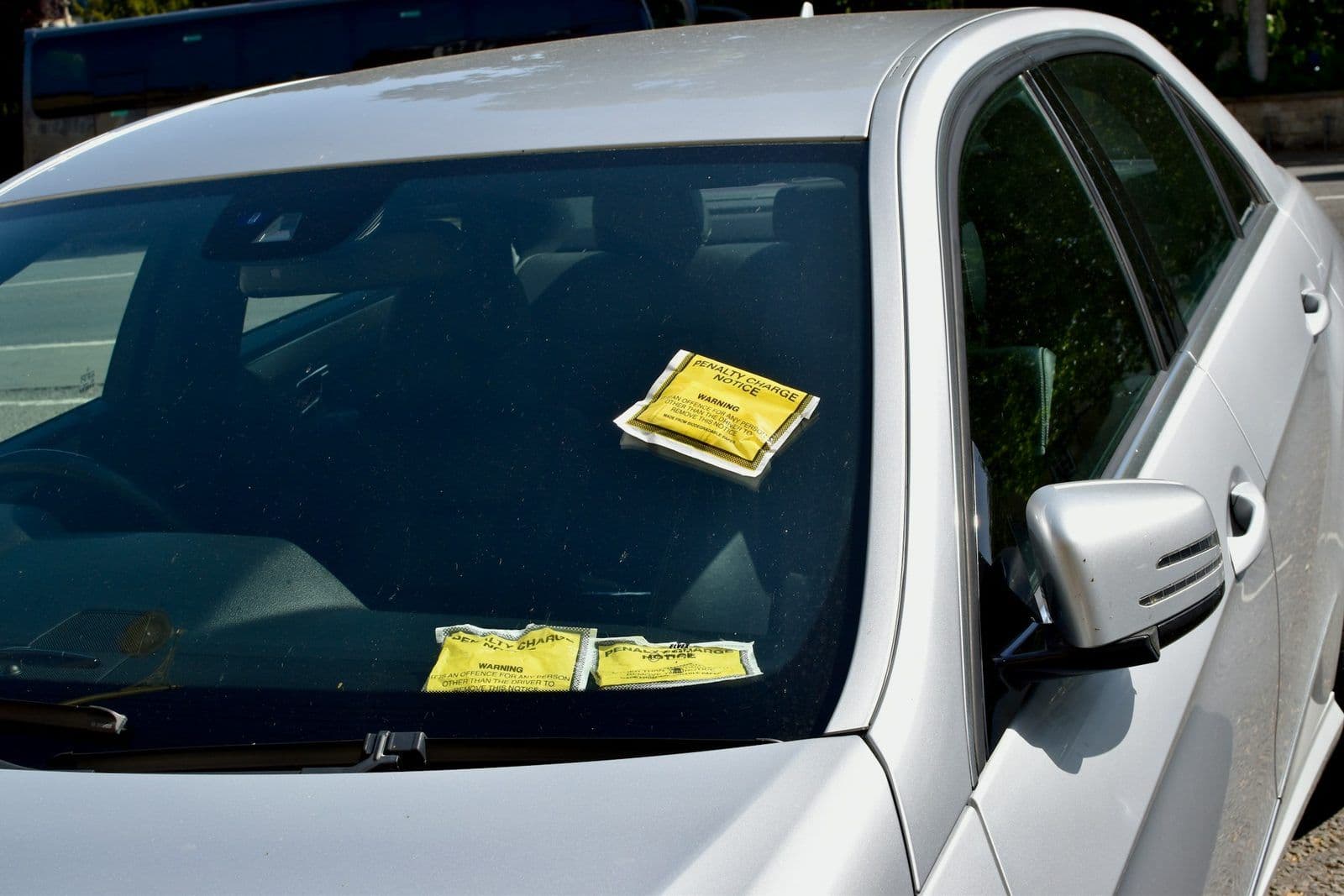
Unpaid tolls and parking tickets do not directly affect credit. Toll invoices and municipal parking fines are government fines, not credit accounts, and no credit bureau receives them as tradelines. The damage begins only when the unpaid balance is sent to a third-party collection agency.
Because a fine is not a consumer credit account, it appears on a report only after a collector furnishes a collection tradeline, at which point FCRA § 1681c caps how long that tradeline can stay: seven years from the date of the original delinquency.
This article covers how a toll or ticket travels from issuance to a credit report, the seven-year clock, the murky FDCPA question, and the dispute steps for inaccurate collection entries. It does not address parking or toll law in any single state, which varies widely.
Key takeaways
- A parking ticket or toll invoice is a municipal or private fine, not a tradeline, so it never appears on a credit report on its own.
- Credit harm happens only after an unpaid balance is referred to a third-party collection agency that reports the debt to a bureau.
- A collection tradeline for a fine must fall off seven years after the original delinquency date under FCRA § 1681c.
- Non-credit consequences, such as registration holds, license flags, booting, and stacked late fees, usually bite long before any credit reporting.
- Government fines are generally not covered by the FDCPA, while private toll-road invoices from commercial operators more clearly are.
- Inaccurate collection tradelines tied to the wrong plate, a sold vehicle, or a rental car can be disputed under FCRA § 1681i.
Do parking tickets and tolls show up on a credit report?
No, not on their own. Parking tickets, toll invoices, red-light camera citations, and similar municipal fines are not credit accounts. The three nationwide bureaus, Equifax, Experian, and TransUnion, never receive them directly from a city or toll authority.
A credit report lists tradelines, meaning accounts a lender or furnisher reports: credit cards, loans, mortgages, and collection accounts. A fine issued by a government body does not fit any of those categories and has no furnisher reporting it as a debt.
The distinction matters because it changes when, and whether, a fine ever touches a credit file. The fine itself is invisible to the scoring model. Only a downstream collection account carries credit consequences.
This is a persistent source of confusion. A driver may assume that an ignored ticket is quietly damaging a score for months, when in reality nothing has reached any bureau. The credit risk sits entirely with the collection referral, not the citation.
How does an unpaid ticket or toll actually reach a credit report?
An unpaid fine reaches a credit report only through a specific chain. The issuing authority must give up on internal collection, refer the balance to a third-party collection agency, and that agency must then furnish a collection tradeline to a bureau.
Most cities and toll operators run their own escalation process for months, or years, before any outside collector is involved. Many balances are resolved, waived, or written off before they ever leave the issuing authority.
The typical path from issuance to a credit report follows a predictable sequence, though the exact timing depends on the jurisdiction and the operator.
- The fine is issued: a parking citation on the windshield, a toll invoice mailed to the registered owner, or a red-light camera notice.
- A grace period passes, after which late penalties and administrative fees begin to stack on top of the original amount.
- The issuing authority applies non-credit pressure, such as a hold on vehicle registration renewal or a flag on the license.
- If still unpaid, the balance is referred to a third-party collection agency, sometimes after being sold or assigned.
- The collection agency may furnish a collection tradeline to one or more bureaus, which is the first moment credit is affected.
Why do late fees and penalties matter more than credit at first?
For most drivers, the stacked penalties and administrative holds cause real financial pain long before any credit reporting. A modest fine can double or triple through late fees, and a registration hold can make a vehicle undrivable.
These consequences are administrative, not credit-based, so they do not show up on a report. They still hit the wallet and the daily routine, which is why prompt resolution matters even though credit is not immediately at stake.
Common non-credit consequences that often arrive first include the following.
- Late fees and penalty surcharges that inflate the original balance, sometimes far beyond the initial fine.
- Holds on vehicle registration renewal, which can prevent legal operation of the vehicle.
- Driver license flags or suspension in some jurisdictions for accumulated unpaid citations.
- Booting or towing of a vehicle with multiple outstanding parking tickets.
- Added collection or court costs if the matter is escalated administratively or to small claims.
How does a municipal-fine collection appear on the credit report?
When a collector does report the debt, it appears as a collection account, not as a parking ticket or toll. The tradeline typically names the collection agency, lists a balance, a status of collection, and a date of first delinquency.
The original creditor field may name the city, parking authority, or toll operator, but the account type is a third-party collection. A single collection tradeline can lower a score, though the impact depends on the consumer's overall file.
How much a fine collection weighs on a score varies. A consumer with an otherwise clean file may feel it sharply, while a report already carrying negative marks may show a smaller marginal change. The status, whether paid or unpaid, also influences newer scoring models differently.
Under the newer credit reporting practices for medical and small-dollar debts, some collection tradelines below certain thresholds are excluded from major consumer reports, but rules for municipal-fine collections are not uniform. For how negative items age off, see how long negative information stays on a credit report.
How long does a fine collection stay on a credit report?
A collection tradeline tied to a fine must be removed seven years from the date of the original delinquency, under FCRA § 1681c. The clock runs from the first missed payment on the underlying obligation, not from the day the collector began reporting.
This original delinquency date is the anchor for the entire seven-year window. A collector cannot restart the clock by buying, reselling, or re-reporting the debt. Doing so is re-aging, a reporting violation.
If a fine collection reappears after being deleted, or the delinquency date looks reset to a more recent date, those are grounds for a dispute. For the mechanics of debt re-aging, see debt re-aging explained.
Does the FDCPA cover parking ticket and toll collections?
Coverage is uneven. The Fair Debt Collection Practices Act applies to a debt arising from a consumer transaction under 15 U.S.C. § 1692a(5). Government fines and penalties generally do not arise from a voluntary consumer transaction, so FDCPA coverage of fine collection is legally murky.
Courts have often treated parking tickets and traffic fines as outside the FDCPA because they are imposed by law, not agreed to in a transaction. That leaves the debtor with fewer of the federal collector-conduct protections that apply to ordinary consumer debt.
Private toll-road invoices are a different case. When a commercial operator runs a toll road and bills a driver for using it, that looks more like a consumer transaction, so collection of those invoices is more clearly covered by the FDCPA.
The practical implications of this split are worth spelling out.
- For a purely governmental fine, FDCPA remedies for abusive calls or false statements may not apply, though state debt-collection law can still protect the consumer.
- For a private toll operator's invoice in collection, standard FDCPA protections, including validation rights, are more likely to apply.
- Regardless of FDCPA coverage, the FCRA still governs how any collection tradeline is reported, so accuracy and the seven-year rule always apply.
Consumers unsure whether a specific collector must honor validation should review the debt validation letter process and request verification in writing regardless.
What are the most common errors on a fine-related collection?
Fine collections are unusually error-prone because they start with a license plate, not a person. A plate ties to a registered owner who may not be the driver, may have sold the car, or may share a household with the actual offender.
The frequent accuracy problems that support a dispute include the following.
- Wrong plate: a misread camera or transposed characters assign the fine to an unrelated vehicle owner.
- Sold vehicle: the ticket or toll occurred after the car was sold, but the old registered owner is billed.
- Rental car: a toll or citation from a rental is billed to the renter's plate-of-record chain incorrectly, or double-billed by the rental company and the operator.
- Identity or file mix-ups: the collection is attached to the wrong consumer's credit file, a common problem in mixed files.
- Already paid or dismissed: the underlying fine was paid or waived, but the collection still reports a balance.
A fine collection landing on the wrong person's report is often a symptom of a larger identity problem. For that, see mixed credit files and how to fix them.
How should a consumer resolve an unpaid toll or ticket in the right order?
The most effective sequence tackles the fine before it becomes a collection, then addresses any inaccurate credit reporting. Working the issue with the issuing authority first is almost always cheaper and faster than fighting a collector later.
A practical resolution order looks like this.
- Verify the fine with the issuing authority. Confirm the plate, date, location, and amount, and request documentation such as a camera image.
- Contest through the administrative process if the fine is wrong. Most cities and toll operators have a formal appeal or hearing window with a deadline.
- Pay or settle before referral. Resolving the balance while it is still with the authority usually stops any collection referral entirely.
- If it has already gone to collections, request written validation and confirm the collector actually holds the debt.
- Dispute any inaccurate collection tradeline with the bureaus under FCRA § 1681i, providing proof of payment, sale, or misidentification.
Skip the paperwork. Start your dispute.
CreditRefresh drafts your FCRA dispute letter and tracks the 30-day investigation window. You review, approve, and send. You stay in control.
Get StartedWhen a fine collection is genuinely inaccurate, a well-documented dispute is the tool that removes it. CreditRefresh analyzes a credit report with AI and drafts custom dispute letters the consumer reviews and approves, keeping the paper trail organized across all three bureaus. For the underlying process, see how to dispute a credit report error.
How is an inaccurate fine collection disputed?
A dispute over an inaccurate fine collection follows the standard FCRA reinvestigation path. Under FCRA § 1681i, a bureau must investigate a disputed item, typically within 30 days, and delete or correct information it cannot verify.
The consumer files with each bureau reporting the item, identifies exactly what is wrong, and attaches evidence. Strong documentation, such as a bill of sale or a paid receipt, makes verification difficult for the collector and the deletion more likely.
If the bureau verifies an item the consumer still believes is inaccurate, the next steps include a method-of-verification request and, where warranted, filing a CFPB complaint. Persistence with accurate evidence is what moves these cases.
Municipal fine vs private toll vs collection: how they compare
The three surfaces where a fine can live behave differently for credit, consumer protections, and time limits. The table below summarizes the practical differences.
| Feature | Municipal fine (unpaid) | Private toll invoice (unpaid) | In third-party collection |
|---|---|---|---|
| On credit report? | No | No | Yes, as a collection tradeline |
| FDCPA coverage | Generally not covered | More clearly covered | Depends on origin of the debt |
| Main early consequence | Registration or license hold | Late fees and escalation | Score impact plus collector contact |
| Time limit | No credit clock yet | No credit clock yet | 7 years from original delinquency (FCRA § 1681c) |
| Best action | Contest or pay the authority | Verify and pay the operator | Validate, then dispute if inaccurate |
Frequently asked questions about tolls, tickets, and credit
Will one unpaid parking ticket ruin my credit?
A single unpaid parking ticket does not appear on a credit report by itself and cannot lower a score on its own. Credit is affected only if the balance is later referred to a collection agency that reports it as a collection account.
Do toll violations get reported to the credit bureaus?
Toll violations are not reported to the bureaus directly by a toll authority. They can affect credit only if the unpaid invoice is sent to a third-party collector who then furnishes a collection tradeline to a bureau.
How long does a fine collection stay on my report?
A collection tradeline for a fine must be removed seven years after the original delinquency date under FCRA § 1681c. Paying the collection does not reset or extend that seven-year clock in either direction.
Can I be sued over an unpaid toll or ticket?
Yes, a city or toll operator can pursue an unpaid balance administratively or in court, separate from any credit reporting. A court judgment is a distinct consequence and may carry its own collection remedies under state law.
Does paying a collection remove it from my credit report?
Paying a fine collection changes the status to paid but does not automatically delete the tradeline. It can remain for the full seven years unless it is inaccurate and successfully disputed, or removed by agreement with the collector.
What if the toll or ticket was for a car I already sold?
If the fine occurred after the sale, it is likely being billed to the wrong party. A bill of sale and transfer records support disputing both the fine with the authority and any resulting collection tradeline under FCRA § 1681i.
Last reviewed: July 2026
This article is for educational purposes only and does not constitute legal or financial advice. The Fair Credit Reporting Act and related regulations are complex, and outcomes depend on individual circumstances. Consumers with specific questions about their credit reports or rights under federal law should consult a licensed attorney or contact the Consumer Financial Protection Bureau directly.