
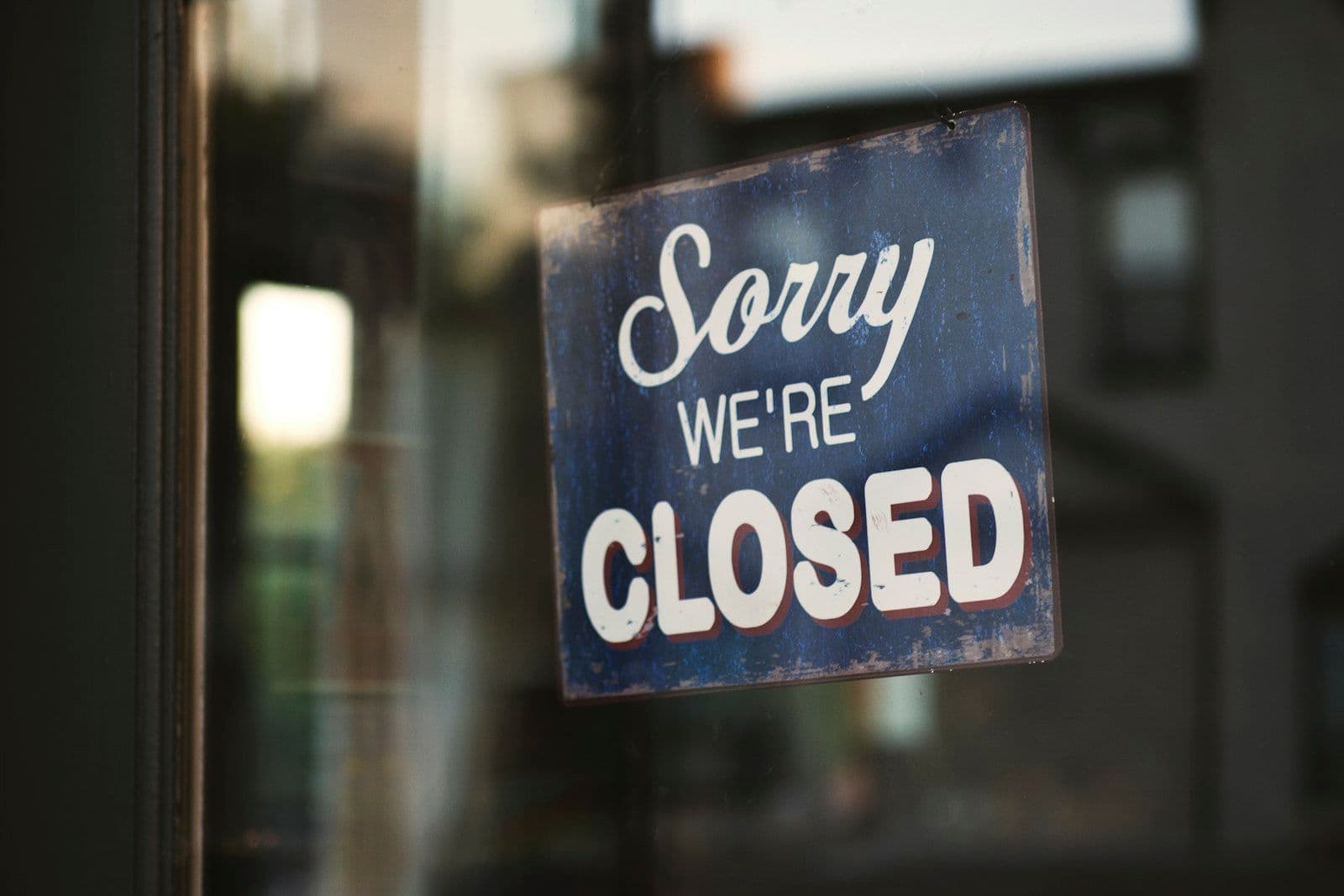
Because closing an account ends its activity, not its record. Closed accounts in good standing stay on your report for about ten years and keep helping the whole time. Negative marks on closed accounts age off seven years from each delinquency.
The lingering entry is usually a feature. The real danger is the closed account that reports wrong, because a stale balance or a false late can drag on your file for years before anyone checks.
What does closed actually mean on a tradeline?
It means no new charges or draws can happen. The tradeline itself stays, with its open date, payment grid, and history intact, and its status changes to closed. A closed card with a balance keeps reporting every month as you pay it down, and that includes any late payments along the way.
So closure is no exit from reporting. The debt survives the closure, and so does the record. The account stops being a tool and becomes a history.
It also explains why a long-closed account can show a fresh “last reported” date. Some lenders keep sending a monthly update on a closed account, even at a zero balance. That is normal. It does not mean the account was reopened, and it does not restart any clock on the negative marks.
How long does each kind of closed account stay?
It depends on the shape the account was in when it closed. The seven-year limit on negative information comes from the FCRA’s obsolescence rules at 15 U.S.C. § 1681c, and a Chapter 7 bankruptcy runs ten (Fair Credit Reporting Act, 1970). The ten-year stay for positive closed accounts is bureau practice, not statute. That works in your favor, since the law caps how long bad news can stay, not good news.
| Closed account type | Time on report | File effect while it stays |
|---|---|---|
| Paid, always on time | About ten years from closure | Positive history and age, nothing to maintain |
| Closed with late payments | Each late ages off 7 years from its date | Negative weight fades; clean months still count |
| Closed with a balance still owed | Reports until paid, then the retention clock runs | Payments keep reporting; new lates still possible |
| Charged off or sent to collections | 7 years from the original delinquency | Major derogatory mark until it expires |
| Closed by grantor, clean history | About ten years | Same as a consumer-closed account; notation unscored |
The full retention calendar across item types sits in how long negative information stays on a credit report. The asymmetry is the headline: good closed accounts outlast bad ones by years.
How do closed accounts affect the score?
Closed accounts keep adding payment history and account age for as long as they stay on file. Those are the two factors that take the longest to build. What closure removes is the account’s credit limit from your utilization math and its activity from your open-account picture. That is the dip covered in the loan payoff score guide.
A closed account showing up is no cause to panic. A common myth says closed accounts stop counting toward age. FICO includes closed accounts in its age math while they remain on file, so a well-aged closed card supports your file for a decade after its last purchase.
What does closed by grantor mean?
It means the lender closed the account, not you. Inactivity closures, risk-based closures, and discontinued products all produce it. The notation is informational. Scoring models do not penalize who closed the account, though a human reviewer might read a pattern of grantor closures alongside other warning signs.
The score effect of a grantor closure is the same limit-removal math as any closure. That is why a dormant card is worth a small recurring charge, the habit covered in does closing a credit card hurt credit.
Which closed-account entries deserve a dispute?
The ones that misstate what happened. Errors bunch up at the moment an account closes, when the furnisher has to update the balance, the status, and who closed it. The checklist below catches the common ones.
- A paid account still showing a balance, or a closed account still reporting open.
- A consumer-closed account marked closed by grantor, or the reverse.
- Late marks dated after the account was paid and closed.
- A paid-in-full account reporting as settled for less, which reads as a derogatory mark.
- Negative items still present past their seven-year expiration.
You are not alone in finding these. Of 5,861,954 credit reporting complaints recorded in the CFPB’s public Consumer Complaint Database from July 2025 through June 2026, 59.4% were about incorrect information on the report, in our own read of that data. Those complaints are unverified consumer allegations.
The federal numbers point the same way. One in five consumers had an error on at least one of their three credit reports (Federal Trade Commission, 2013). The settled-versus-paid mix-up in particular moves real lending decisions.
How do you dispute a wrong closed account with the bureaus?
You write to each bureau that shows the error, name the field that is wrong, and attach your proof. The law does the rest of the work. A bureau that gets your dispute must run a reasonable reinvestigation, generally within 30 days, and must delete or correct what it cannot verify (FCRA Section 611, 1970).
Sort the problem into one of four buckets before you write. Is it inaccurate, incomplete, unverifiable, or too old to report? A closed card showing a balance you paid is inaccurate. A charge-off past seven years is too old. Each bucket points to its own proof, and a payoff letter or a final statement is the strongest proof a closed account can have.
Dispute at all three bureaus. Equifax, Experian, and TransUnion each keep their own file, so a fix at one does not fix the other two. The step-by-step process sits in how to dispute a credit report error.
Expect pushback on a sloppy answer. A bureau that just parrots the furnisher’s reply can violate the FCRA, since both bureaus and furnishers owe a real, independent investigation (CFPB, 2022). That rubber stamp is what frustrated buyers describe. Tricia W., in a 1-star Trustpilot review of Dispute Beast on August 7, 2026, wrote: “This does not work the creditors just confirm all your information and nothing actually gets removed. And they don’t tell you that after signing up you’re gonna have to pay extra to have them even mail any of the letters which cost more if you do it yourself.”
Keep a copy of every letter and the date it went out. The 30-day window runs from the day the bureau gets it, and a second round after 30-plus days often lands better than the first.
Should a clean closed account ever be removed?
No, and the request misunderstands the asset. A closed account with years of on-time history is pure upside. It gives you age and payment history with no payment to make and no risk to manage. Removing it would delete free positive data.
The instinct usually comes from misreading the report, where closed sounds like a problem. The entries worth your energy are the wrong ones and the negative ones nearing expiration. The clean history is quietly helping.
Skip the paperwork. Start your dispute.
CreditRefresh drafts your FCRA dispute letter and tracks the 30-day investigation window. You review, approve, and send. You stay in control.
Get StartedWhat happens when a closed account finally falls off?
The file recalculates without it. A negative item’s expiration is a quiet score event in your favor. A positive account’s eventual drop can trim your average age, and files with few accounts feel that most. Neither sends a notice, which is one more reason to read your full reports on a schedule.
If you are tracking an expiration date, check that the drop actually happens. Items sometimes outlive their windows because of wrong dates. An expired item still showing is disputable as obsolete under the FCRA, and the bureau has to act on it.
How does a closed account differ from a deleted one?
Closure is a status. Deletion is removal. A closed account stays visible with its full history, while a deleted tradeline vanishes, as happens after a successful dispute of an unverifiable account. Credit repair marketing mixes the two up when it promises to delete accounts that are simply, correctly, closed.
Deletion has its own aftermath. A deleted item can lawfully return only through the certification-and-notice process covered in the reinsertion guide. Identical items coming back after removal is a pattern consumers report again and again (CFPB, 2024). A closed account just ages along its schedule.
What should you do after an account closes?
Protect the accounts you still have open. Closure pulls a limit out of your utilization math, so the fastest thing you control is the balance on your remaining cards. Keep dormant cards alive with a small charge you pay in full, and set autopay for at least the minimum so a missed payment never becomes the next seven-year mark.
The stakes are real money. On a new car, the average APR ran from 4.55% for superprime borrowers to about 16% for deep-subprime borrowers (Experian, 2026). A closed account reporting a false late can push you across one of those lines.
If the account went to collections, know you have company. About 77 million Americans, 35% of adults with a credit file, have debt in collections on their report (Urban Institute, 2025). Pull all three reports, confirm the dates are right, and put every wrong one into a dispute round.
Which Tool Fixes a Wrong Closed Account on All Three Reports?
A wrong closed account has to be fixed at every bureau that shows it, and the options split into done-for-you firms, do-it-yourself software, and free monitoring. Here is how they compare on price, what you get for a closed-account error, and how many bureaus they reach.
| Tool | What you pay | What that buys | Bureaus | Trustpilot |
|---|---|---|---|---|
| CreditRefresh | $49.99/mo, no setup fee, cancel anytime. Mail letters yourself free, or pay RushMail per letter | Scans all three reports, flags wrong closed accounts, drafts an FCRA letter you sign | All three | 4.3 (9 reviews) |
| Dispute Beast | From $49.99/mo for required monitoring. Mail letters yourself free, or pay Sprint Mail per letter | AI dispute letters bundled with its own paid credit monitoring | All three | 4.2 (2,067 reviews) |
| DisputeBee | $49/mo personal, $129/mo business | Letter templates; you import reports, print, mail, and track replies yourself | All three | 3.2 (68 reviews) |
| The Credit People | $99/mo standard, $119/mo premium, or $599 for 6 months | Done-for-you disputes; you do not see or approve each letter | All three | 1.7 (17 reviews) |
| Lexington Law | $139.95/mo, invoiced at the end of each service period | Attorney-backed firm challenges items for you; letters not shown to you | All three | 3.2 (624 reviews) |
| Credit Karma | Free, paid for by lender referrals | Free monitoring; Direct Dispute works with TransUnion only, no letters drafted | TransUnion | 1.1 (912 reviews) |
Every price is that company’s own published rate, read off that company’s own site on September 15, 2026. Trustpilot scores and review counts as published on September 24, 2026.
How CreditRefresh Finds Wrong Closed Accounts Across All Three Bureaus
A closed account only needs action when it reports wrong, and CreditRefresh is built to find that one entry in three reports. In CreditRefresh’s September 18, 2026 member-data extract, 2.3% of disputed bureau-level items in mailed rounds had a recorded outcome. Within that subset, 47.9% were no longer reported on a newer pull of the same bureau, while 52.1% remained reported with a changed balance, status or negative flag.
Here is how it works. You connect your Equifax, Experian, and TransUnion reports through Refresh Monitoring. The AI scans every account, closed ones included, and flags items that look inaccurate, incomplete, unverifiable, or too old to report. It drafts a print-ready FCRA letter for each item you pick, and nothing goes out until you review and sign it. Then it tracks each letter against the 30-day window.
The price is $49.99 a month, with no setup fee, no per-dispute charge, and no contract. Mail the letters yourself, or hand a round to RushMail for a small per-letter fee. Members who work the full program can also claim our 100% money-back guarantee, which is a refund promise and never a score promise.
Frequently Asked Questions
How long does a closed account stay on a credit report?
About ten years for accounts closed in good standing, and seven years from each delinquency for the negative marks on troubled ones. The clean account’s long stay is good news, since it gives you free history and age the whole time.
Does a closed account still affect the credit score?
Yes. Its payment history and age keep counting while it stays on file. What stops is its limit’s share of your utilization and its role as an open, active account, which is where closure dips come from.
Why does a closed card still show a balance?
Either the balance is real, because closure does not erase debt and the account reports until paid, or the furnisher failed to update after payoff. The first is normal. The second is a disputable inaccuracy, with your payoff confirmation as proof.
Is closed by grantor bad for credit?
Not in scoring, since the models ignore who closed the account. The limit-removal math is the same either way, and only a human reviewer reading a pattern of risk-based closures next to other problems would weigh the notation.
Can a closed account be reopened instead?
Sometimes, within a window that varies by issuer. Reopening restores the limit and the original account’s history, which beats opening a new one, so a call to the issuer soon after an unwanted closure is worth the minutes.
Do I have to dispute a wrong closed account at every bureau?
Yes, if it shows wrong at more than one. Equifax, Experian, and TransUnion each keep their own file, so a correction at one bureau leaves the other two untouched.
Where can I check my closed accounts for free?
The FCRA gives you the right to a free report from each of the three bureaus. Read all three side by side, because the same closed account can show a different balance or status at each one.
Last reviewed: June 2026
This article is for educational purposes only and does not constitute legal or financial advice. The Fair Credit Reporting Act and related regulations are complex, and outcomes depend on individual circumstances. Consumers with specific questions about their credit reports or rights under federal law should consult a licensed attorney or contact the Consumer Financial Protection Bureau directly.
CreditRefresh finds the closed accounts reporting wrong on your three reports and drafts the FCRA letter for each one, which you sign before anything is sent. It is included with Refresh Monitoring at $49.99 a month, and you can cancel anytime. Backed by a 100% money-back guarantee.