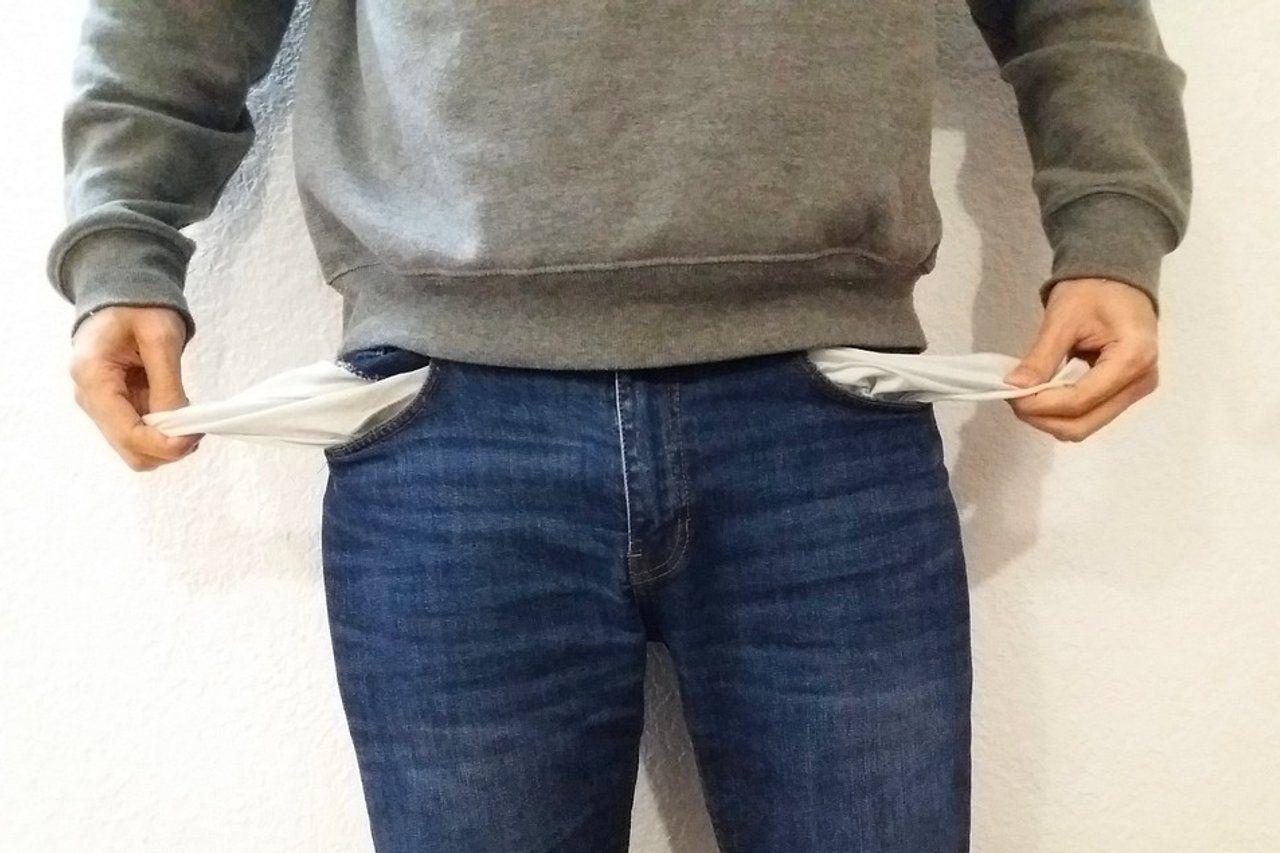
A partial payment on a collection debt does not settle it, and in some states it can restart the time limit a collector has to sue you. It generally does not restart the seven-year credit reporting period, which runs from the original delinquency.
The problem is that the payment feels like progress while the balance, the lawsuit clock and the credit report each answer to different rules. Before you send anything, it helps to know which of the three your money touches.
Does paying part of a collection debt stop the collector?
No. A partial payment lowers the balance, but the collector can keep contacting you about what remains, and interest and fees may continue to accumulate. The collection also stays on your report: a partial payment does not remove it or lift your score on its own.
The payment is generally applied to the debt, so your balance decreases. You still owe the remaining balance, because a partial payment does not settle the account. Collection of the rest does not stop automatically.
Can a partial payment on a collection debt restart the time limit to sue?
Yes, in some states. In those states a partial payment can restart the clock that determines how long a collector has to sue you.
Whether it does depends on state law and how old the debt is. Take a hypothetical: a $50 payment on a $1,500 debt that has sat in collections for five years. Depending on your state’s laws, that payment could revive the collector’s ability to sue for the remaining $1,450.
Does a partial payment keep a collection on your credit report longer?
No. The seven-year reporting period generally runs from the original delinquency rather than from your most recent payment. Paying part of the debt does not extend how long the collection can appear on your credit reports.
The Fair Credit Reporting Act sets the start. Under Section 605(c)(1) (15 U.S.C. 1681c(c)(1)), for a delinquent account placed for collection or charged to profit and loss, the 7-year period begins upon the expiration of the 180-day period beginning on the date of the commencement of the delinquency that immediately preceded that action (Federal Trade Commission, Fair Credit Reporting Act, 2026). The U.S. Government Publishing Office’s edition of 15 U.S.C. § 1681c (2024) reads the same way.
The date of first delinquency drives the clock, and that is the date when you originally fell behind, not when the account was charged off or sold. Re-aging is a furnisher illegally resetting that date to keep a negative item on the report longer than 7 years. If a date on your report looks shifted later than the actual delinquency, that is disputable.
How do you check a collection debt is yours before paying?
Ask for validation in writing, within the window the Fair Debt Collection Practices Act gives you. Under Section 809 (15 U.S.C. 1692g), within five days after the initial communication a collector must send a written notice stating the amount of the debt and the name of the creditor to whom it is owed (Fair Debt Collection Practices Act, Section 809).
That notice must also say that unless you dispute the validity of the debt within thirty days after receipt, the collector will assume it is valid. If you notify the collector in writing within that thirty-day period that you dispute it, the collector will obtain verification. The notice must also state that, on your written request within the thirty days, the collector will provide the name and address of the original creditor, if different from the current creditor (Section 809(a)(5)). That last element answers whether the account was ever yours.
How do you settle a collection debt so nothing more is owed?
Negotiate the settlement first and get it in writing before you send money. The agreement should say the agreed payment satisfies the debt in full and that no remaining balance will be pursued.
Settling lets you pay an agreed amount, for example $800 on a $2,000 collection, and the collector agrees the remaining $1,200 will not be owed. That is the difference from a partial payment, which leaves the rest standing.
What are your options for disputing a collection before you pay it?
You can dispute with the bureau, and the FCRA gives the bureau 30 days to reinvestigate a disputed item, counted from the date it receives the dispute notice (Federal Trade Commission, Fair Credit Reporting Act, 2026). CreditRefresh drafts dispute letters for all three bureaus, which you mail yourself or send via RushMail.
The letters belong to you: your name, your signature, your decision to send. CreditRefresh does not mail letters automatically; every drafted letter waits for your review, approval and delivery choice.
Report data that does not match is what a one-star Trustpilot review of Dispute Beast from Thomas M., dated July 10, 2026, describes: “Don’t ask me for a review when you’ve done nothing. Also, there’s no place to add specifics, like the first 8 don’t even have my name or address correct, that’s NOT my name and I’ve NEVER lived there.”
Which credit-dispute tool fits a collection you want to dispute?
The table sets each tool’s price, bureau reach and Trustpilot score side by side for a reader disputing a collection. It shows who drafts and mails the letters, what each costs per month and which bureaus each one reaches.
| Tool | What you pay | What that buys | Bureaus | Trustpilot |
|---|---|---|---|---|
| CreditRefresh | $49.99 a month via Refresh Monitoring; no setup fee; letters self-mailed free or RushMail per-letter fee | Software you control; AI drafts letters, you review and sign; bundled with Refresh Monitoring subscription | All three | 4.6 (22 reviews) |
| Dovly | Free $0 (no credit card); Premium $99.99/year (about $8.33/mo) or $39.99/month; no setup fee published; Dovly sends the disputes itself | Dovly AI writes and sends TransUnion dispute letters for you (one a month on Free; unlimited on Premium, the AI picking which items); weekly TransUnion report, alerts, $2K tradeline, credit lock, $1M ID theft insurance on Premium | TransUnion only | 4.6 (715 reviews) |
| Dispute Beast | Free tool; Beast Credit Monitoring from $49.99/m; Sprint Mail extra per letter, or free self-mail | Software the user controls (DIY AI app), bundled with paid monitoring required | All three | 4.2 (2091 reviews) |
| DisputeBee | $49/mo Individual; $129/mo Business; cancel anytime; you mail letters yourself | Software you control to draft letters; Business tier adds unlimited clients, bulk letters, send-mail API, client portal, Zapier | All three | 3.2 (68 reviews) |
| Lexington Law | $139.95/month, invoiced at end of each service period; 50% off first payment for veterans and active military | Attorney-handled disputes by the firm, not software you control; attorney case setup after a free assessment | All three | 3.2 (624 reviews) |
Every price is that company’s own published rate, as its own site states it. Trustpilot scores and review counts as published.
How CreditRefresh drafts dispute letters for a collection on your reports
You review and sign every letter yourself before anything is sent. CreditRefresh reads credit reports, finds items that look inaccurate, incomplete, unverifiable or too old to be reported, and drafts a ready-to-send dispute letter for each, for Equifax, Experian and TransUnion.
Nothing leaves your account until you have reviewed and signed it. You can mail letters yourself, or hand a round to RushMail, the affiliated mailing partner, for a small per-letter fee. CreditRefresh is included at no additional cost with a Refresh Monitoring subscription, a flat $49.99 a month, and you can cancel anytime.
CreditRefresh is not a law firm and its letters are not legal advice. The bureaus decide dispute outcomes, and no score or result is promised. The money-back guarantee has its conditions at creditrefresh.ai/guarantee.
FAQ
What should you ask a collector before sending any money?
Ask for the validation information. Under Regulation F (12 CFR 1006.34), the list includes the collector’s name, your name, the mailing address for each of you, the itemization date, the amount of the debt on that date, an itemization of interest, fees, payments and credits since, the current amount and the creditor’s name; a time-barred debt disclosure is not on that list. Under Section 809(a)(5) (15 U.S.C. 1692g(a)(5)), you can also ask in writing, within the thirty-day period, for the original creditor’s name and address, if different from the current creditor. Get any settlement agreement in writing before sending money.
Skip the paperwork. Start your dispute.
CreditRefresh drafts your FCRA dispute letter and tracks the 30-day investigation window. You review, approve, and send. You stay in control.
Get StartedHow do you find out how old a collection debt really is?
Start with your credit reports. The credit reporting period is generally tied to the original delinquency, not your most recent payment. All three bureaus let you check each report once a week for free at AnnualCreditReport.com, and you can order online or by calling 1-877-322-8228 (Federal Trade Commission, consumer.ftc.gov, 2026).
Does paying a collection raise your credit score?
Not automatically. A partial payment doesn’t automatically remove the collection or improve your credit score. Models differ on paid collections: VantageScore states all paid collection accounts are ignored in VantageScore 4.0 (VantageScore, Knowledge Center), and FICO Score 9 disregards paid third-party collections (FICO, myFICO).
How do you make a debt collector stop calling you?
Send a written “cease communication” request. FDCPA Section 805(c) (15 U.S.C. 1692c(c)) prohibits a debt collector from most communications with you about the debt once you have sent one (Consumer Financial Protection Bureau, CFPB Bulletin 2013-12, 2013).
What kinds of mistakes does an AI dispute tool flag on a credit report?
Under the Fair Credit Reporting Act, you can dispute information that is inaccurate, incomplete or unverifiable, plus items too old to be reported. CreditRefresh connects to your credit reports, uses AI to flag items that may fall into those groups, and drafts a dispute letter for each one.
How do you send dispute letters to all three credit bureaus?
CreditRefresh drafts letters for Equifax, Experian and TransUnion, which you mail yourself or send through RushMail for a small per-letter fee. The Consumer Financial Protection Bureau’s procedure for mailing a dispute runs:
- Dispute the information with the credit reporting company. Explain in writing what you think is wrong, why, and include copies of documents that support your dispute.
- Include your complete name, address and telephone number; credit report confirmation number, if available; each error you want fixed, including the account number; a clear explanation of why you are disputing; a request that the information be removed or corrected; a copy of the report portion with the disputed items circled or highlighted; and copies (not originals) of supporting documents.
- You can send by certified mail and ask for a return receipt, so you have a record the letter was received.
- Keep copies of your letter and the documents you send.
- The credit reporting company must investigate, forward the dispute and all relevant information to the company that provided the information, and report the results back to you.
- Then dispute with the company that provided the information. Send disputes to furnishers in writing, using certified mail, to the address on your report or one the furnisher specifies.
- If the furnisher’s investigation shows wrong information, or it cannot be verified, the furnisher must update or remove it and notify all the credit reporting companies.
- If the furnisher says the information is accurate, you can ask the credit reporting companies to include a statement explaining the dispute in your reports.
Source: Consumer Financial Protection Bureau, How do I dispute an error on my credit report?
What happens if a collection comes back after a dispute removed it?
The credit reporting company must tell you. Under FCRA Section 611(a)(5)(B)(ii) (15 U.S.C. 1681i(a)(5)(B)), if deleted information is reinserted, the agency “shall notify the consumer of the reinsertion in writing not later than 5 business days after the reinsertion.” Clause (iii) adds that the agency must provide in writing, within the same 5 business days, a statement that the disputed information has been reinserted.
CreditRefresh reads your reports, flags collection items that look inaccurate, incomplete, unverifiable or too old, and drafts a dispute letter for each that you review, sign and send. Backed by a 100% money-back guarantee.