
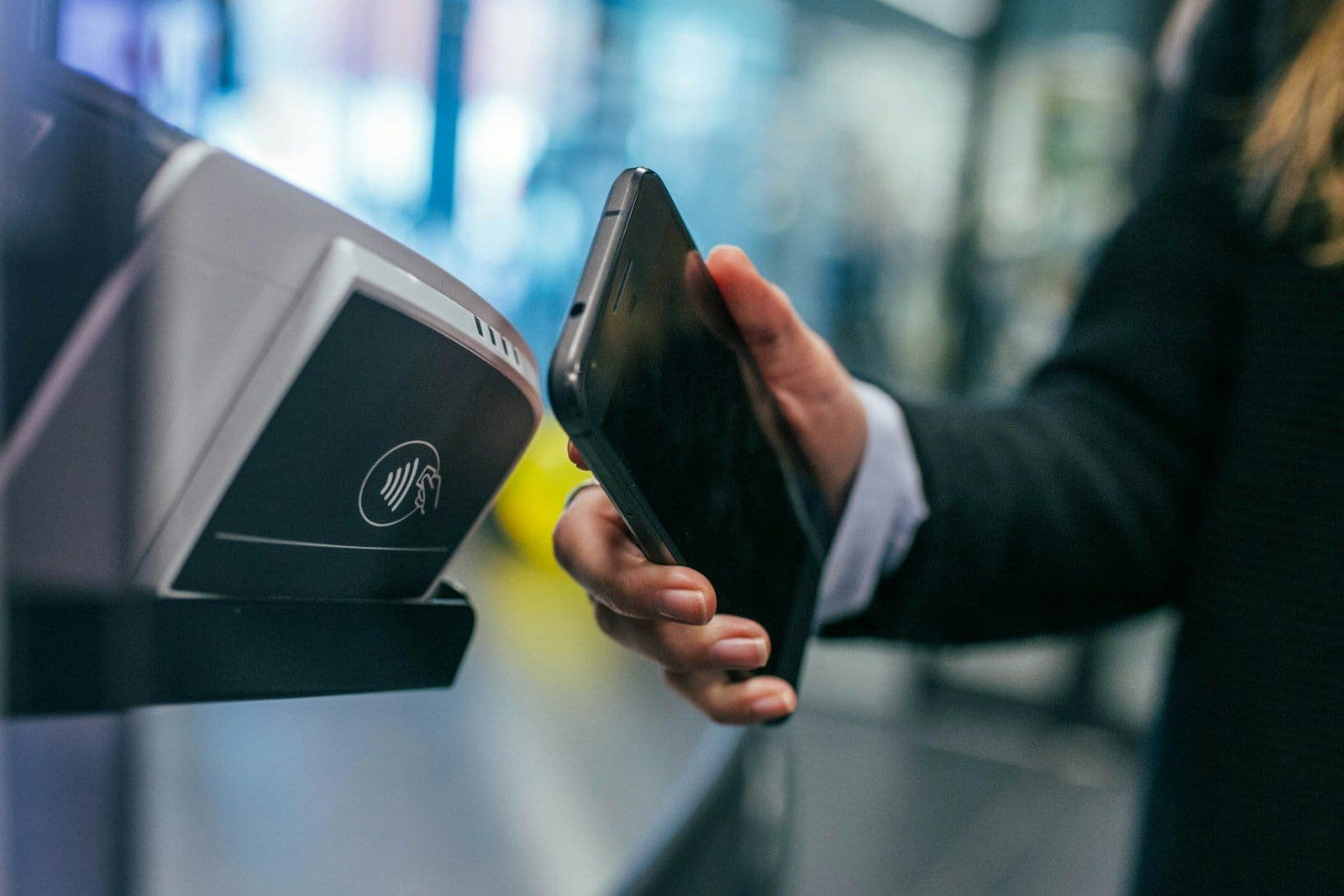
Buy now, pay later moves your credit in one direction far more reliably than the other. Whether a short pay-in-four plan paid on schedule reaches a credit report at all now turns on which provider opened it: Affirm furnishes its Pay in 4 plans, Klarna and Afterpay hold their short plans back, so at most providers the plan still builds nothing. The same plan abandoned can be handed to a collection agency at any provider, and that agency can file an entry the bureaus are allowed to report for seven years.
Buy now, pay later reached 16% of US adults in the prior 12 months, rising to 23% of adults earning $25,000 to $49,999 and to 29% of Black and 26% of Hispanic adults (Federal Reserve, 2026). Furnishing across all of it is voluntary. The Consumer Financial Protection Bureau’s 2024 interpretive rule read pay-in-four plans as a form of credit card under the Truth in Lending Act and Regulation Z, and the CFPB withdrew it on May 12, 2025 and has said it does not intend to reissue it. No nationwide standard replaced it, so every provider decides for itself which of its plans it sends to Equifax, Experian and TransUnion, and the scoring model a lender pulls then decides whether the plan counts for anything.
What follows describes US plans as of September 2026. Terms differ by provider and by plan and they change, and the disclosure attached to the specific plan you are taking is what controls your case. The CFPB tracks the rules as they firm up at consumerfinance.gov.
The Plan Type Decides Whether a Credit Report Ever Sees It
Length and interest are what separate a plan the bureaus never hear about from one that reports like a loan. The CFPB states that most buy now, pay later products repaid in four interest-free payments do not report to the major credit reporting companies, while longer interest-bearing financing resembles a conventional installment loan and is far more likely to be sent. One provider has already broken that pattern: Affirm now furnishes its short plans alongside its long ones, which is why the plan type answers this question only once you have named the provider.
| Plan type | Credit check | Reporting footprint |
|---|---|---|
| Pay in four, interest free | Soft pull or none | Historically none, though Affirm now furnishes its Pay in 4 |
| Monthly interest-bearing loan | Soft or hard, by provider | Often reports as an installment loan |
| BNPL virtual card on card rails | Varies | Follows the issuing account’s own rules |
| Any plan, defaulted | Not applicable | Collection entry, reportable about seven and a half years |
The last row has always been live. A BNPL balance sent to collections reports like any other collection, with the mechanics set out in what happens when an account goes to collections. What is changing is the first row, where on-time short-plan activity is starting to be furnished at some providers, while the furnishers themselves say it is not yet read by traditional scores.
Pay-in-Four Runs a Soft Check and Longer Financing Can Run a Hard One
Applying for a standard pay-in-four plan does not create the inquiry other lenders see. The CFPB states that buy now, pay later lenders generally do not perform hard credit inquiries, which are the type of inquiry that can affect a score. Larger purchases and long-term financing are the exception at several providers, and those applications are disclosed as hard pulls before you accept.
A soft check is visible only to you and moves nothing. FICO’s soft-versus-hard pull page puts a single hard inquiry at 5 to 10 points on average and says its scores stop counting inquiries after twelve months, and its credit-checks page publishes a lower figure, under five points (FICO, 2026). Either way the number is an average across files rather than a price yours will pay. Equifax, Experian and TransUnion each display the inquiry for a second year as their own practice, not because the FCRA sets that deadline. The difference, and how long each is recorded, is in our guide to soft versus hard credit inquiries.
The exposure that actually matters here sits outside the inquiry system. Four separate installment schedules debiting one checking account are invisible to every provider except the one that opened each plan, and no credit report shows them together, so the inquiry question answers far less than it appears to.
Which BNPL Providers Actually Furnish Data to the Bureaus?
The three largest providers have landed in three different places, and all three keep moving as scoring models and regulatory expectations develop. Affirm reports every pay-over-time loan it issues, Pay in 4 included, to Experian from April 1, 2025 and to TransUnion from May 1, 2025. Klarna’s own announcement covers its longer Term Loan product and names TransUnion, and its Pay in 4 stays outside. Afterpay furnishes nothing in the United States. Each row below states what the provider itself discloses, so confirm one against that provider’s current terms before a credit decision rests on it.
| Provider | On-time activity reported? | Bureaus used | How missed payments surface |
|---|---|---|---|
| Affirm | Yes, every pay-over-time loan including Pay in 4, since 2025 | Experian and TransUnion | Late payments can be reported to the bureaus |
| Klarna | Only the longer Term Loan financing, never Pay in 4 | TransUnion | Delinquent accounts may be sent to collections |
| Afterpay | Generally not reported | None for standard plans | Delinquent accounts may be sent to collections |
One thread runs through all three rows. On-time short-plan activity is the last thing a provider starts furnishing and the first thing it holds back, while serious delinquency arrives on the file at every one of them, usually through a collector. We cover each provider on its own at does Afterpay report to credit bureaus, does Affirm report to credit bureaus, and does Klarna report to credit bureaus.
FICO Score 10 BNPL Counts a Plan Earlier FICO Versions Cannot See
Furnishing gets a plan onto the file, and the scoring model a lender pulls decides whether it counts toward the number. FICO announced FICO Score 10 BNPL and FICO Score 10 T BNPL in June 2025 as the first scores from a leading provider built to read buy now, pay later data, aggregating separate short loans when it calculates certain variables (FICO, 2025). Every earlier version, FICO Score 8 included, was built without it.
- Where the data sits. When it is furnished at all, the activity is held apart from the cards and loans rather than mixed in with them. TransUnion’s own announcement of the Affirm expansion says the plans it receives are visible to the consumer on his own report and not to lenders in the near term.
- Whether it counts. TransUnion and Experian both said the same thing in the releases announcing that reporting: the data is not factored into traditional credit scores yet. So furnishing today puts a plan on the record rather than into the number, and FICO Score 10 BNPL is the first model built to read it. Our comparison of FICO score versus VantageScore covers why one file read by two models returns two numbers.
- What counts everywhere. A collection is scored like any other collection in every model, and payment history is the heaviest of the five factors behind a credit score.
A Collector Files the Entry, and FCRA Section 605(c)(1) Starts Its Clock 180 Days Later
A seriously past-due balance can be referred to an outside collection agency, and the collector furnishes the entry under its own name. Under FCRA Section 605 most negative items, including accounts placed for collection, may be reported for seven years, and Section 605(c)(1) fixes where that clock starts. It runs from 180 days after the delinquency that immediately preceded the collection, not from the day the account was handed over, so the entry falls off about seven and a half years after the first missed payment. Passing the balance to a second collector does not restart it. The plan that was never worth a tradeline when it was current becomes a mark that outlasts it by years.
Before that, the provider’s own machinery runs first: a late fee where the plan allows one, the account suspended, and at some providers the remaining installments accelerated. An autopay retry against an empty account adds overdraft exposure on the banking side before anything touches credit at all.
Size does not protect you. About 77 million Americans, 35% of adults with a credit file, carry debt in collections (Urban Institute, 2025), and a small balance produces the same line as a large one. A surprise BNPL collection follows the same audit and dispute path as any other, set out in the debt validation letter guide and in how to dispute a credit report error.
Why Do BNPL Borrowers Fall Behind on a $135 Loan?
Because the loans arrive several at a time and each one keeps its own calendar. Roughly 63% of buy now, pay later borrowers originated multiple simultaneous loans at some point during the year and 33% borrowed from more than one provider, in the CFPB’s January 2025 study of 2022 originations (CFPB, 2025). No provider in that group can see the others, and neither can an underwriter.
The individual amounts are small enough to feel harmless. Six large pay-in-four firms surveyed by the regulator originated 335.8 million loans worth $45.2 billion in 2023, at an average size of $135 adjusted for inflation (CFPB, 2025). A loan that size bills about $34 every two weeks, and five of them running at once is a fixed $675 obligation spread across five calendars in a six-week window.
Then the calendars meet a thin cushion. Slightly more than one-fourth of BNPL users were late making a payment in the prior 12 months, and that share runs to 40% of users earning under $25,000 against 11% of users earning $100,000 or more (Federal Reserve, 2026). Fixed debits do not move when the money is short, which is the road from a plan nobody reports to a collection everybody can see. The pressure building underneath the product is in more Americans falling behind on buy now, pay later loans.
Can Buy Now, Pay Later Build Credit Yet?
Only where the provider furnishes the plan and the lender pulls a model that reads it, and both conditions fail more often than they hold. A plan that is never sent satisfies nothing, and a furnished plan read by FICO Score 8 counts for nothing either. The effect where it does land is young, uneven, and impossible to plan around.
A thin file gets far more reliable lift from accounts built to report every month. Secured credit cards and credit-builder loans exist for that job, and the full set is in how to build credit from scratch. Treating a payment convenience as a credit strategy gets the order backwards: the reporting is a side effect of the product, and it is the side effect the provider can switch off.
Mortgage Underwriters Read BNPL Debits Off Bank Statements Before Any Bureau Does
An underwriter asking for two months of statements sees every installment draft whether or not a single plan appears on your credit report. Recurring BNPL debits read as obligations and as a spending pattern, and a statement dense with them invites questions about the rest of the file. As furnishing expands, the same plans start appearing directly on the report as well.
The quiet period that covers new cards and new loans extends to installment plans of any size. The months before an application are the wrong season to open one, and the sequencing is in our guide to preapproval versus prequalification.
Confirm a BNPL Refund Posted Before You Stop the Installments
A return does not cancel the schedule on its own. The merchant refund and the installment calendar run on separate rails, so drafts can keep coming while the return processes, and the plan ends when the provider applies the credit against the remaining installments. Confirm that it posted instead of assuming it did.
Disputed purchases expose the larger gap. The rule that would have supplied a federal billing-error right for pay-in-four was the CFPB’s 2024 interpretive rule, and the Bureau withdrew it in May 2025, so a disputed BNPL charge is worked out under the retailer’s and the provider’s own terms. What funded the installments can matter more than the plan does: where a provider lets you pay a plan with a credit card, the card’s own billing-error route stays open on those charges, which is a protection the card supplies and never a right attaching to the plan. Keep the return confirmation, document the dispute, and keep the installments current while it is open where you can afford to, because the road from a disputed charge to a credit-report entry runs through a missed payment.
Set Autopay, Cap Yourself at One Plan, and Read the Reporting Terms
Five habits close off almost every route from a payment convenience to a credit-report entry, and the first two do most of the work.
- Run one plan at a time. Stacking across providers is where six-week budgets break, and no provider can see the total.
- Autopay every installment from an account that will hold the money on each due date, since the retry against an empty account is where the late fee and the overdraft both start.
- Track the active plans in one place. Four installment calendars hide a total by design.
- Skip buy now, pay later on consumables. Financing groceries is a signal that the budget needs repair, and installment credit does not repair it.
- Read the plan’s reporting and late-fee terms before you tap the button, because they vary by provider and by plan inside the same app.
Pull all three reports twice a year on top of that, because a collection arrives under a collector’s name and Equifax, Experian and TransUnion each carry their own file. Our walkthrough is at how to get a free credit report.
Skip the paperwork. Start your dispute.
CreditRefresh drafts your FCRA dispute letter and tracks the 30-day investigation window. You review, approve, and send. You stay in control.
Get StartedThe Upside Is Optional and the Downside Is Automatic
Paid on schedule, a pay-in-four plan is a six-week arrangement most credit files never learn about, and it is the provider’s choice whether that changes. Abandoned, it becomes a collection line carrying somebody else’s name that the bureaus may report for seven years, and nobody has to choose anything for that to happen.
So use the product if it fits your budget, and never count on it to build anything. Accounts that report every month do the building, and all three reports are where you find out whether an old plan came back wearing a collector’s name.
Which tool helps you check a BNPL collection
A short payment plan can leave a debt under a name you don’t know. You may need all three reports to find it. In our September 18, 2026 data, paying CreditRefresh members had 30 negative bureau entries on average. That can count one debt more than once, and not every entry is wrong. Compare the help each tool gives you to find, dispute and follow an entry.
| Tool | What you pay | What that buys | Bureaus | Trustpilot |
|---|---|---|---|---|
| CreditRefresh | $49.99/mo, no setup fee, cancel anytime. Mail letters yourself free, or pay RushMail per letter | Scans all three reports for entries you may need to dispute, including a BNPL collection. Drafts each letter for you to read and sign, with monitoring to check later reports | All three | 4.3 (9 reviews) |
| Dispute Beast | From $49.99/mo for required monitoring. Mail letters yourself free, or pay Sprint Mail per letter | Free letter tool once you already know which bureau carries the entry. Mail it yourself free, or pay Sprint Mail per letter | All three | 4.2 (2,067 reviews) |
| DisputeBee | $49/mo personal, $129/mo business | Templates to draft your own letter once you find the entry yourself, then you mail and log each reply | All three | 3.2 (68 reviews) |
| The Credit People | $99/mo standard, $119/mo premium, or $599 for 6 months | Works the entry across all three files for you, but you never see the letter that goes out | All three | 1.7 (17 reviews) |
| Lexington Law | $139.95/mo, invoiced at the end of each service period | A law firm works the entry across all three files; no self-serve option to see or write it | All three | 3.2 (624 reviews) |
| Credit Karma | Free, paid for by lender referrals | Alerts you to a new entry at TransUnion only, and its dispute path drafts no letter | TransUnion | 1.1 (912 reviews) |
Every price is that company’s own published rate, read off that company’s own site on September 15, 2026. Trustpilot scores and review counts as published on September 24, 2026.
An alert is a useful start when a collection appears. You still need to check whether it belongs to you and whether the balance is right. Martha M., 1 star, June 22, 2026, on Credit Karma: “they let me suffer identity theft which negatively impacted my credit in general”. Keep the plan’s payment record beside the report when you read a dispute letter. That helps you name what is wrong, even if the collector’s name is new to you.
Take the next step on a wrong BNPL collection with CreditRefresh
A paid-off plan should not leave you trying to explain a balance you no longer owe. CreditRefresh scans your three bureau reports and helps you review the collection tied to that plan. If the amount is wrong or the debt belongs to someone else, choose the item to dispute. We draft the letter for you to read and sign.
After a letter is mailed, the next report gives you something to check. In our paying-member data, 47.9% of disputed items with a recorded outcome no longer appeared on a later report from the same bureau. Outcomes were recorded for 2.3% of items in mailed rounds in our September 18, 2026 data. This covers all dispute types.
Becca, a 5-star Trustpilot review, July 25, 2026: “…it instantly pulled up my reports and flagged the things that were bringing down my credit score so that I could review and address those problem areas…”
For $49.99 a month, Refresh Monitoring includes CreditRefresh with no setup fee, no per-dispute charge and no contract. You can mail each letter yourself or pay a small fee per letter for RushMail. You can follow the entry while you build or rebuild credit. You can cancel any time.
It is backed by our 100% money-back guarantee: members who work the full program and see no bureau score rise above where they started can claim back every Refresh Monitoring payment. It is a refund promise, never a score promise.
Frequently Asked Questions
Can I get a 700 credit score with late payments?
Payment history is the single heaviest input to a score, so lates hold a file down, and older ones weigh less than recent ones as they age. Nobody can tell you a number you will reach or when, and any service that offers to is making a promise the Credit Repair Organizations Act bars.
Which is better, Klarna or Afterpay, for credit?
Neither one furnishes its standard short plan in the United States, so the credit question does not separate them. What separates them is fee structure and plan length, and Klarna’s longer financing plans can be furnished where its Pay in 4 is not.
Can a missed $25 buy now, pay later payment really hurt credit?
Yes, by the collection route. Small defaulted balances are placed with collectors the same way large ones are, and the resulting entry is reportable for about seven and a half years from the first missed payment regardless of size, so the existence of a collection matters far more than its dollar amount.
Does a buy now, pay later plan count toward my credit utilization?
No. Utilization measures revolving balances against revolving limits, and an installment plan carries a fixed schedule rather than a limit, so it sits outside that ratio even when it is furnished. Timing rules for the revolving side are in credit utilization and statement date timing.
Do buy now, pay later plans show up on a background check?
Not the plans themselves, since screening companies pull from consumer reports and court records rather than from provider ledgers. A collection that reached your credit file can appear on a tenant screening report that includes a credit component.
Can I dispute a buy now, pay later collection that is not mine?
Yes. Under 15 U.S.C. 1681i a bureau must reinvestigate a disputed item and delete anything it cannot verify, generally within 30 days, and the furnisher carries its own duty under 15 U.S.C. 1681s-2 to investigate and correct what it sent.
Does closing a buy now, pay later account remove it from my report?
No. Closing the account with the provider stops new purchases and changes nothing about an entry a collector already furnished, which runs on the original delinquency’s clock under FCRA Section 605(c)(1), seven years from 180 days after the missed payment that produced it rather than from the date a collector took the account. Any correction to that entry goes through a dispute with the bureau reporting it.
Last reviewed: September 2026
This article is for educational purposes only and does not constitute legal or financial advice. Buy now, pay later reporting practices change frequently and depend on the specific plan and provider. Consumers with questions about how a particular account appears on a credit report should consult the provider directly or contact the Consumer Financial Protection Bureau.
CreditRefresh reads all three bureau reports and shows you what a lender sees, including a collection nobody told you about. Connecting your reports takes a few minutes, and the first scan is ready the same day. Backed by a 100% money-back guarantee.