
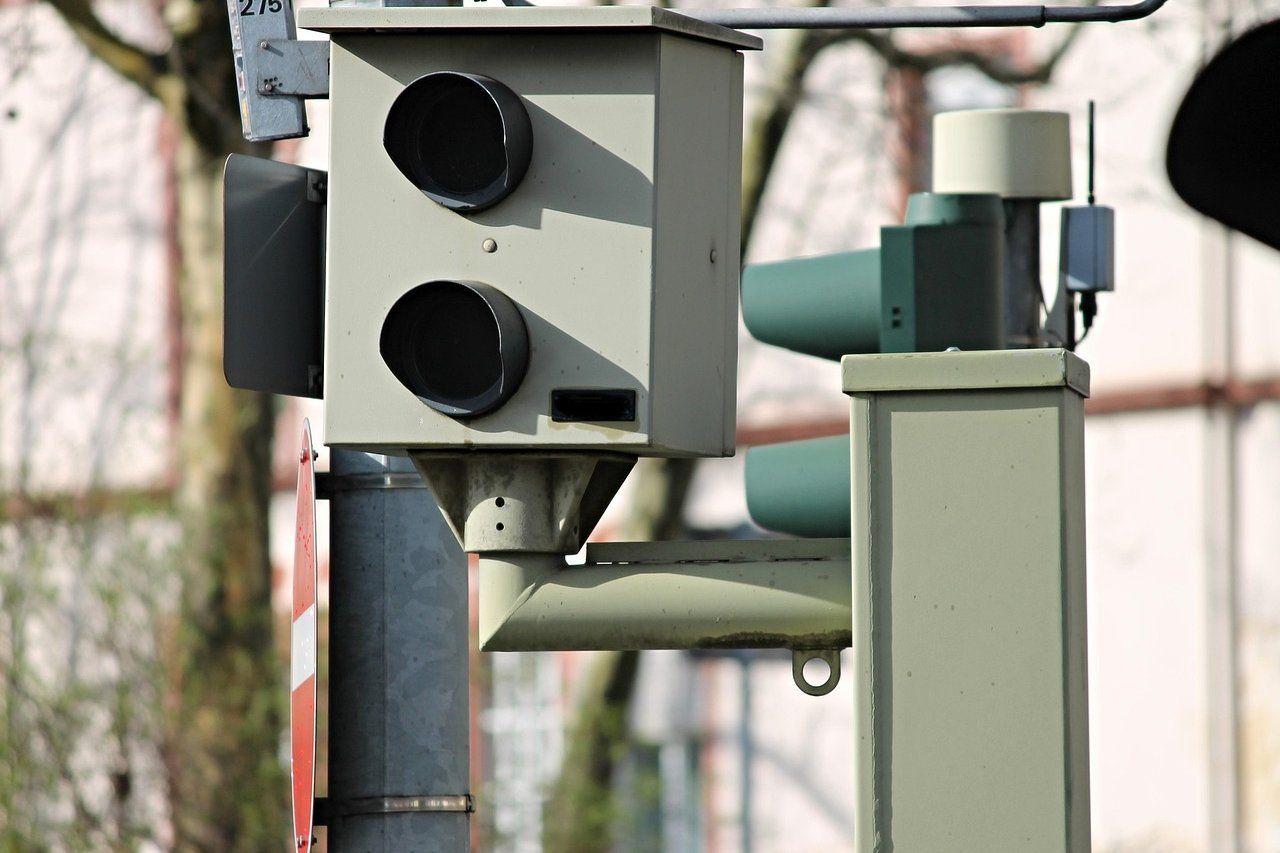
No, a red light camera ticket does not affect your credit when it is issued or when you pay it. It can hurt your credit only if the ticket goes unpaid, is sent to collections and the collection agency reports it to the credit bureaus.
If the ticket just arrived in the mail, the question is whether it gets paid or goes overdue. If a ticket collection already sits on a report, the question is whether the entry is accurate, complete and verifiable, and whether it falls inside the reporting period.
Red light camera tickets don’t hurt your credit unless they reach collections
No, a camera ticket has no direct effect on your credit when it is issued, and a paid ticket leaves no mark on your reports just because you received it. The one route to your credit is an overdue ticket that is sent to collections and reported by the collection agency, which is why the ticket itself never appears on a report but a collection can.
Red light camera tickets do not directly affect your credit score. The possibility of credit consequences begins only when an unpaid ticket is handed to a collection agency and that agency reports it to the credit bureaus.
What happens to your credit when a camera ticket goes to collections?
An overdue ticket can pick up late fees, depending on local law, and can then be sent to a collection agency. The ticket affects credit only if that agency reports the collection to the credit bureaus, and then it shows as a collection account on your reports.
Experian explains that unpaid municipal fines can potentially affect credit if they become reported collection accounts. Until that report happens, the overdue ticket is a debt with a city or a collector, and your reports show nothing about it.
How long can a camera ticket collection stay on your credit report?
A reported collection can stay on your credit report for seven years under the FCRA, counted from a date the statute defines. For an account placed for collection, the seven years begin upon the expiration of the 180-day period that starts on the date the delinquency commenced, the delinquency that immediately preceded the collection activity (Fair Credit Reporting Act, Section 605(c)(1), 2026).
The statute’s list of reportable items includes “(4) Accounts placed for collection or charged to profit and loss which antedate the report by more than seven years.” (Federal Trade Commission, Fair Credit Reporting Act, 2026). Accurate, current information can stay on a report for the periods the FCRA allows.
Does your state or city change what an unpaid camera ticket can do?
Yes. In Montgomery, Alabama, red light camera violations are civil, cannot be reported on your criminal or driving record, and nonpayment cannot result in arrest or incarceration.
Alabama has specific protections for certain red light camera violations, and Montgomery’s law is one example. Late fees on an overdue ticket depend on local law, so the rules for your own city or state decide what an unpaid ticket can add before it could ever reach a collector.
How do you dispute a camera ticket collection that is wrong or too old?
You dispute it with the credit bureau reporting it, and the bureau has 30 days to reinvestigate, counted from the date it receives your dispute notice (Federal Trade Commission, Fair Credit Reporting Act, 15 U.S.C. § 1681, revised 2026, FCRA § 611(a)(1)(A)). That 30-day clock applies when you notify the agency directly, or indirectly through a reseller, that the completeness or accuracy of an item in your file is disputed.
What the bureau must do afterward is set by FCRA Section 611(a)(5) (15 U.S.C. 1681i(a)(5)). Where, after any reinvestigation, a disputed item is found to be inaccurate or incomplete or cannot be verified, the bureau shall promptly delete that item from the file or modify it as appropriate. That one sentence is the source of all three dispute grounds, and it is the provision that carries the deletion duty itself.
Which tool should you use to dispute a ticket collection on your credit report?
CreditRefresh drafts letters for all three bureaus, and you review and sign each one before it is sent. The table sets each tool’s published price, what that price buys, the bureaus it covers and its Trustpilot score.
| Tool | What you pay | What that buys | Bureaus | Trustpilot |
|---|---|---|---|---|
| CreditRefresh | $49.99 a month via Refresh Monitoring; no setup fee; letters self-mailed free or RushMail per-letter fee | Software you control; AI drafts letters, you review and sign; bundled with Refresh Monitoring subscription | All three | 4.6 (22 reviews) |
| Dovly | Free $0 (no credit card); Premium $99.99/year (about $8.33/mo) or $39.99/month; no setup fee published; Dovly sends the disputes itself | Dovly AI writes and sends TransUnion dispute letters for you (one a month on Free; unlimited on Premium, the AI picking which items); weekly TransUnion report, alerts, $2K tradeline, credit lock, $1M ID theft insurance on Premium | TransUnion only | 4.6 (715 reviews) |
| Dispute Beast | Free tool; Beast Credit Monitoring from $49.99/m; Sprint Mail extra per letter, or free self-mail | Software the user controls (DIY AI app), bundled with paid monitoring required | All three | 4.2 (2091 reviews) |
| DisputeBee | $49/mo Individual; $129/mo Business; cancel anytime; you mail letters yourself | Software you control to draft letters; Business tier adds unlimited clients, bulk letters, send-mail API, client portal, Zapier | All three | 3.2 (68 reviews) |
| The Credit People | $99/month Standard; $119/month Premium; $599 for 6 months Premium Flat Rate; mailing fee not published | Firm drafts and sends disputes for you; you do not draft, sign or mail letters; includes unlimited challenges and monthly report refreshes | All three | 1.7 (18 reviews) |
Every price is that company’s own published rate, as its own site states it. Trustpilot scores and review counts as published.
The Bureaus column shows each tool’s published reach. Dovly’s own site says it writes and sends TransUnion dispute letters only, and Dovly holds 4.6 on Trustpilot across 715 reviews. Four of Dovly’s 10 most recent 1 and 2 star reviews raise paying for months with nothing changed. George T. gave Dovly one star on Trustpilot on September 16, 2026: “I have been a paying customer for a year. My score is still the same as the day I signed up.”
Dispute Beast covers all three bureaus and holds 4.2 across 2091 reviews on Trustpilot. In its most recent 1 and 2 star reviews, 22 of 34 raise paying for months with nothing changed. DisputeBee, at 3.2 across 68 reviews, has 6 of its 10 most recent 1 and 2 star reviews saying nobody answers.
The Credit People drafts and sends disputes for you, at $99 a month Standard or $119 a month Premium according to its own pricing. It holds 1.7 on Trustpilot across 18 reviews, all 18 one-star, and 12 of those 18 raise paying for months with nothing changed. Kikoff holds 3.9 across 2345 reviews, and 43 of its 104 most recent 1 and 2 star reviews raise billing that continued or refunds that were refused.
How CreditRefresh helps you dispute a ticket collection that shouldn’t be on your reports
You review and sign every letter, and the bureaus decide the outcome. Refresh Monitoring costs $49.99 a month with CreditRefresh included, and it gives you access to reports from Equifax, Experian and TransUnion. You can cancel anytime.
CreditRefresh reads those reports, finds items that look inaccurate, incomplete, unverifiable or too old to be reported, and drafts a ready-to-send dispute letter for each. The AI does not dispute on your behalf. A letter reaches a bureau only when you mail it or place a RushMail order, and every drafted letter waits for your review and approval first.
Legacy credit repair has a regulatory record. The CFPB filed a lawsuit on May 2, 2019 against PGX Holdings, Inc., Progrexion Marketing, Inc., CreditRepair.com, Inc., John C. Heath, Attorney at Law, PLLC (Lexington Law) and others, alleging prohibited upfront fees for telemarketed credit repair services plus deceptive bait-and-switch marketing. On March 21, 2022, the FTC obtained a court order halting operations at Turbo Solutions Inc. (d/b/a Alex Miller Credit Repair), alleging false promises to remove negative items and an illegal $1,500 upfront fee.
We built the other option. If a debt is yours and reported accurately, we generate no letter for it. We are not a law firm and our letters are not legal advice. The bureaus determine dispute outcomes, we do not promise a score, and your score depends on the rest of your file.
Members who work the full program and see no bureau score rise above where they started can claim back every Refresh Monitoring payment. That is a refund promise and never a score promise, and its conditions are at creditrefresh.ai/guarantee.
FAQ
Skip the paperwork. Start your dispute.
CreditRefresh drafts your FCRA dispute letter and tracks the 30-day investigation window. You review, approve, and send. You stay in control.
Get StartedWho reports a red light camera ticket to the credit bureaus?
The collection agency does, and only after the ticket is overdue and has been sent to collections. A camera ticket has no direct impact on your credit when it is issued.
What should I do when a debt collector contacts me about a camera ticket?
Within five days after the first communication, a debt collector must send you a written notice stating the amount of the debt and the name of the creditor (Fair Debt Collection Practices Act, Section 809, 15 U.S.C. 1692g). The notice must include “a statement that unless the consumer, within thirty days after receipt of the notice, disputes the validity of the debt, or any portion thereof, the debt will be assumed to be valid by the debt collector”. It must also say what follows if you dispute the debt in writing within that thirty-day period.
How can I keep a camera ticket from reaching collections?
A ticket has to go overdue before it can be sent to collections. Late fees may accumulate once it is overdue, depending on local law. Ask the city or state that issued the ticket about its rules for the ticket.
What is a collection account and how does it show on a credit report?
A collection account is the entry that appears when a ticket sent to collections is reported by the collection agency to the credit bureaus. A ticket sent to collections can affect your credit only if the agency reports it. Until then, the ticket is not on your reports.
Does the CreditRefresh report scan hurt my credit score?
No. CreditRefresh accesses your reports through a regulated credit-data provider as consumer-initiated monitoring, which counts as a soft inquiry. Every report pull we run on your behalf is a soft pull, and it covers Equifax, Experian and TransUnion.
Who decides whether a disputed ticket collection comes off my credit report?
The bureau does. FCRA Section 611(a)(5) (15 U.S.C. 1681i(a)(5)) requires it, after reinvestigation, to promptly delete or modify a disputed item found to be inaccurate or incomplete, or one that cannot be verified. The letters are yours: your name, your signature, your decision to send. CreditRefresh won’t generate a dispute letter for a balance you owe that the creditor reports accurately.
How can I find out quickly if a ticket collection lands on my reports?
Refresh Monitoring alerts come from the monitoring provider and cover new inquiries, new accounts and other changes across the bureaus, such as an update to an existing account. The feed updates as the provider reports new activity, on no schedule you control within the app. When nothing has been reported, the page shows “No alerts right now”.
CreditRefresh drafts dispute letters for items on your Equifax, Experian and TransUnion reports that look inaccurate, incomplete, unverifiable or too old to be reported, and you review and sign each one before it goes out. Backed by a 100% money-back guarantee.




