
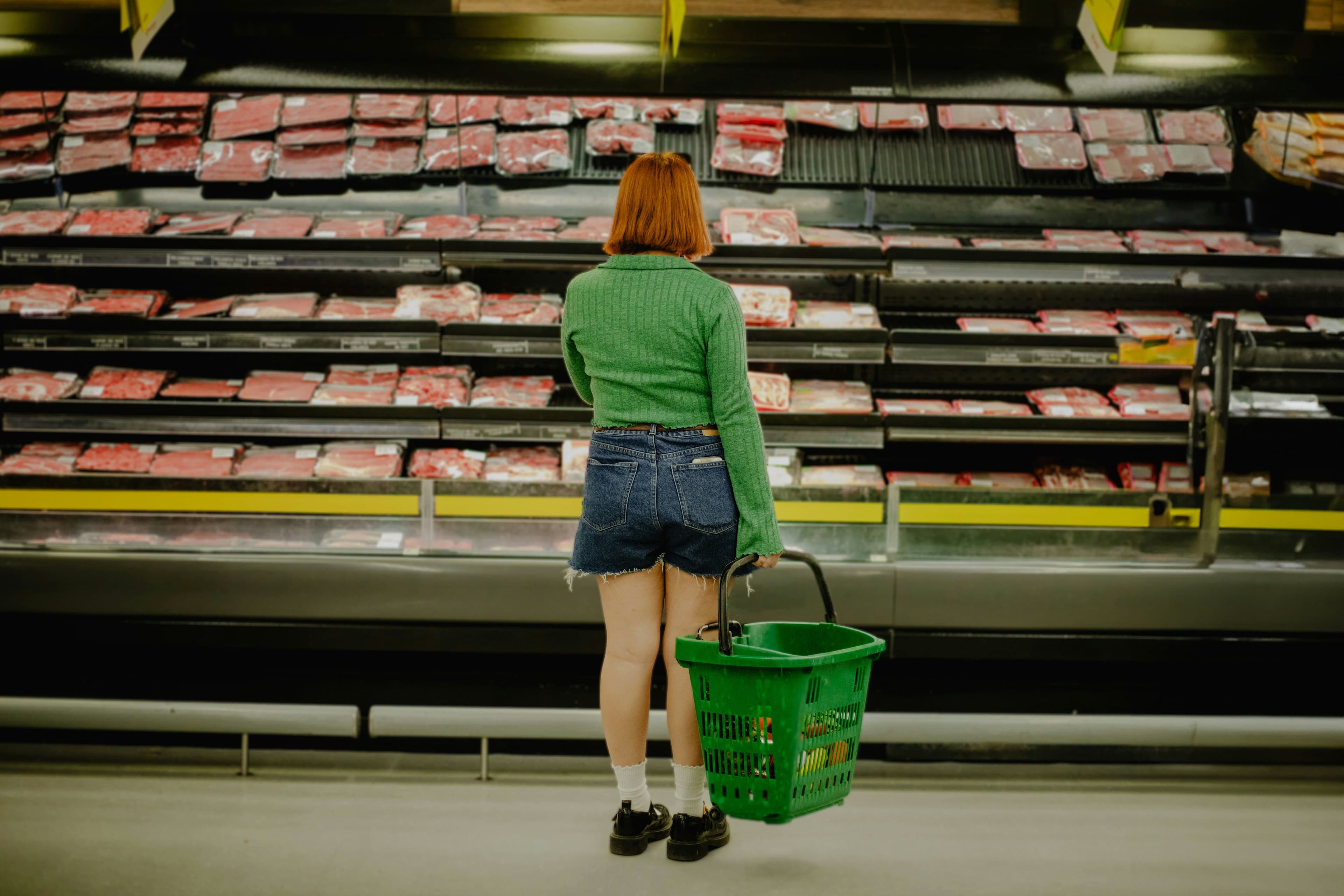
You already know grocery prices are higher than they used to be. You feel it every time you load the cart with the same items and watch the total climb past where it was a year ago.
What the data now confirms is harder to shrug off. For a growing share of households, the credit card has become the bridge between what they earn and what dinner costs, and that bridge charges interest every single month.
The Checkout Line Is Where Inflation Gets Personal
Groceries beat housing. Credit One Bank’s 2026 Financial Confidence Index, a December 2025 survey of 1,000 U.S. adults, asked Americans what hit their personal finances hardest over the past year. 54% named groceries and everyday essentials (Credit One Bank, 2026). Rent and card interest came in behind the weekly food run.
The price history explains why. According to the USDA’s Economic Research Service, food prices rose 3.1% in 2025, with grocery prices up 2.3%. That sits on top of a 5% jump in 2023 and the historic 11.4% spike in 2022. Taken together, grocery prices are up about 25% since 2020, and the USDA forecasts another 2.5% in 2026.
Here is how the numbers stack up.
| Measure | Figure | Source |
|---|---|---|
| Say groceries hit their finances hardest | 54% | Credit One Bank, 2026 |
| Grocery price rise since 2020 | about 25% | USDA ERS yearly figures |
| Saw their credit card balance grow in 2025 | 28% | Credit One Bank, 2026 |
| Call rising grocery prices a big source of stress | 53% | AP-NORC via NPR, 2025 |
An AP-NORC survey reported by NPR found that 53% of Americans call rising grocery prices a significant source of stress. The Bureau of Labor Statistics confirmed that food prices outpaced overall inflation in 2025. Coffee rose 11.8%. Beef was up 15% year over year as of December 2025, and nonalcoholic beverages climbed 5.1%.
For a lot of families, inflation got personal at the grocery store, long before the gas pump or the rent check. A rent increase comes with a letter. Grocery inflation is death by a thousand paper cuts: a dollar more here, fifty cents there, until your weekly bill is $40 higher and you can’t point to any single item that explains it.
How Grocery Prices Drive Americans Into Credit Card Debt
When food costs outrun paychecks, the card covers the gap. Credit One Bank’s survey found that 28% of consumers saw their credit card balance grow in 2025, while only 14% saw it shrink (Credit One Bank, 2026). Twice as many people moved deeper into debt as climbed out, and the reason sits in the cart.
Among people earning under $50,000 a year, the picture gets worse. In the same survey, 62% of that group said they had no emergency savings at all.
This ties straight into what we see in credit card debt across the country. Bankrate’s 2026 survey found that 33% of credit card debtors named day-to-day costs like groceries, childcare, and utilities as the main cause of their debt.
Another 41% in that survey pointed to emergency expenses. Forget the shopping-spree stereotype. Americans are drowning in debt because the basics cost too much.
The same pattern shows up in buy now, pay later usage. LendingTree reported that 25% of BNPL users now finance groceries with installment plans, nearly double the rate from a year earlier. When people split a grocery bill into four payments, the household budget is already stretched thin.
| Category | Price change | Source |
|---|---|---|
| Beef and veal | +15.0% | BLS, 2025 year over year |
| Coffee and tea | +11.8% | BLS, 2025 year over year |
| Sugar and sweets | +6.7% | USDA ERS, 2026 forecast |
| Nonalcoholic beverages | +5.1% | BLS, 2025 year over year |
| All groceries | +2.5% | USDA ERS, 2026 forecast |
What Carrying Groceries on a Credit Card Really Costs
Food bought on a card and carried past the due date keeps costing money after it’s eaten. 13% of general purpose credit card accounts were in persistent debt in 2024, up from 9.9% in 2022 (CFPB, 2025). That means the cardholder paid more in interest and fees that year than they paid down.
Here is the math on a grocery gap. Say you run $200 a month over budget and carry the full $2,400 for a year at a 23.7% APR. That’s about $560 in interest, so you pay about $2,960 for $2,400 worth of food.
It shows up in our own members, too. In CreditRefresh’s September 18, 2026 analysis of paying-member data, revolving utilization on the latest report averages 38.3%, with a median of 22%, and 20% of members sit at 75% or higher.
A few terms come up again and again once food goes on credit.
| Term | What it means for you |
|---|---|
| APR | The yearly interest rate your card charges on a balance you carry |
| Revolving balance | What you still owe on a card after the due date passes |
| Persistent debt | A year where interest and fees beat what you paid toward the balance |
| Charge-off | The lender books your unpaid debt as a loss; collection can continue |
| Collection account | A debt handed or sold to a collector, who can then report it |
Why Grocery Stress Keeps Growing After You Leave the Store
Money stress follows you home. It keeps you up at night, and it strains your relationships, your health, and your ability to think clearly about what to pay first.
The surveys put numbers on it.
| Finding | Figure | Source |
|---|---|---|
| Women who feel worse off than a year ago | 36% vs. 26% of men | Credit One Bank, 2026 |
| Gen Z who expect household income to rise in 2026 | 7% | Credit One Bank, 2026 |
| Consumers who don’t feel ready for economic trouble | 44% | Credit One Bank, 2026 |
| Hopelessness tied to debt, 2022 to 2025 | 6% to 22% | Debt.com, 2025 |
| Lost sleep over money stress, 2022 to 2025 | 2.5% to 13% | Debt.com, 2025 |
In Debt.com’s 2025 Mental Health and Money Survey, 71% of people said the ease of paying by card hurts their mental health. The card makes it too easy to spend money you don’t have on things you truly need. A grocery run is the clearest case of that.
Skipping Meals to Keep the Card Paid Hurts Health, Too
When the food budget runs short, the first cuts land on the plate. Fresh produce and meat get swapped for cheaper, more processed food because it fills more stomachs per dollar. In a tight house, a parent or caregiver can end up skipping a meal so the kids eat.
That trade feels like saving money. It still costs something.
Worse food and skipped meals wear down your energy and your mood, and they make every money decision after that one harder. So the stress from the last section and the diet from this one feed each other. The person trying to keep the card under its limit is often the one running on the least fuel.
You Can’t Opt Out of Eating, So the Worry Never Switches Off
Food is the one bill you pay every few days, and you can’t cancel it. Only 46% of U.S. adults said they had set aside enough to cover three months of living costs, down from 53% in 2021 (FINRA Investor Education Foundation, 2025). Without that cushion, every grocery trip becomes a small test of whether the paycheck holds.
You can skip a trip or a streaming plan. You can’t skip dinner for a month.
That’s why grocery worry feels different from other money stress. It doesn’t spike once and fade. It comes back at every register, a low hum of “will this card go through,” and it wears people down over months.
What Happens When Grocery Debt Lands in Collections
A card balance that goes unpaid long enough can be charged off and sent to a collector, and collectors get a lot of complaints. Of 333,590 debt collection complaints recorded in the CFPB’s public Consumer Complaint Database from July 2025 through June 2026, 41.4% were about attempts to collect debt not owed, according to our own read of the CFPB’s public Consumer Complaint Database.
In that same set, 24.2% involved a collector taking or threatening negative or legal action. Another 17.9% were about written notice of the debt.
These are unverified consumer allegations, and the CFPB does not confirm the facts alleged.
The Fair Debt Collection Practices Act gives you the right to demand that a collector validate a debt and to dispute one it cannot verify. If a grocery-era card balance shows up with a collector you’ve never heard of, or for an amount that looks wrong, ask for validation before you pay a cent.
Why Grocery Prices Aren’t Coming Back Down
Even when price growth slows, prices don’t fall back to where they were. The USDA predicts grocery prices will rise 2.5% in 2026, slower than the spike years, but that’s 2.5% on top of about 25% since 2020. Your grocery bill isn’t heading back to 2019. It’s just climbing more slowly.
Several forces keep prices high. The U.S. cattle herd has been shrinking since 2019, pushing beef prices up even as people keep buying. Supply chain snags and trade fights, including tariffs on imported staples like bananas and coffee, add cost at the border.
Labor costs in food processing and retail remain high. Climate and disease add shocks nobody can plan for, from avian flu wiping out egg-laying flocks to droughts cutting crop yields. Each one ripples through the whole food supply.
The USDA forecasts that 7 of the 15 grocery categories it tracks will rise faster than their 20-year average in 2026, as Grocery Dive reported. That list includes beef, fish, processed fruits and vegetables, sugar, cereals, and nonalcoholic beverages. Beef and veal are forecast to rise another 5.5%, and sugar and sweets 6.7%. Eggs should finally fall after their 2024 to 2025 spike, and they’re the only category expected to decline.
What You Can Do About Grocery Debt Right Now
You can’t control food prices. You can control how much they cost you on top of the sticker price, and how much of that cost ends up on your credit file.
Track where the money is actually going
For one month, save every receipt and add up the real total. Knowing the actual number, even when it stings, gives you a baseline to work from.
Substitute, don’t sacrifice
Beef up 15%? Switch to chicken or pork, which are rising at a fraction of that rate. Coffee up 12%? Buy in bulk or switch brands. The USDA data shows not every category is inflating equally, so smart swaps can cut the monthly bill without changing much on your plate.
Don’t let grocery debt hide on your credit card
If you carry a balance partly because of groceries, separate that spending so you can see it. Some people use one dedicated card or a prepaid debit card for groceries to set a hard cap. At a 23.7% APR, even $100 of grocery spending carried for a year costs you about $24 in interest.
Put your debts in order before prices climb again
Grocery debt rarely sits alone, so rank what you owe and attack it in order.
- Pay more than the minimum. About 15% of general purpose cardholders made only the minimum payment in 2024 (CFPB, 2025), and minimum-only payments keep grocery balances alive for years.
- Rank balances by APR. Put every extra dollar on the highest-rate card first, and pay the minimum on the rest.
- Call your card issuer. Ask whether it offers a lower rate or a hardship plan, and write down who you spoke with and when.
- Make collectors verify it. Send a validation request under the FDCPA before paying any collector, especially on a debt you don’t recognize.
Check your credit report for errors
If rising grocery costs have pushed you onto credit, your credit report matters more than ever, because it feeds the rate you pay on that debt. In the FTC’s national accuracy study, about 5% of consumers had an error serious enough to move them into a worse pricing tier for credit (FTC, 2013). CreditRefresh scans all three bureau reports for items that look wrong and drafts a dispute letter for each one you choose, which you review and sign before anything is sent.
Use the help that exists
If your household income qualifies, SNAP benefits, local food banks, and community programs exist for times like these. There’s no shame in using resources built to help families afford food. That’s exactly what they’re for.
Rising prices shouldn’t cost you more than they already do. If grocery inflation has pushed you to lean on credit, errors on your report could mean you’re paying higher interest than you need to. CreditRefresh can help. Check your credit report.
A hopeful sign: Credit One Bank’s survey found that 53% of Americans plan to seek financial advice or education in 2026. People are paying attention, and they’re starting to act. That’s the first step.
Which Credit Tool Fits a Budget Already Squeezed by Groceries
When groceries already eat the paycheck, a credit tool has to earn its monthly fee, and the options split into do-it-yourself software, done-for-you services, and free monitoring. Here is how each one compares on what you pay, what you get for a report with errors on it, and how many bureaus it reaches.
| Tool | What you pay | What that buys | Bureaus | Trustpilot |
|---|---|---|---|---|
| CreditRefresh | $49.99/mo, no setup fee, cancel anytime. Mail letters yourself free, or pay RushMail per letter | Scan of all three reports, a drafted FCRA letter per flagged item, you sign first | All three | 4.3 (9 reviews) |
| Dispute Beast | From $49.99/mo for required monitoring. Mail letters yourself free, or pay Sprint Mail per letter | AI “attack” letters plus an iOS app with an AI Credit Coach | All three | 4.2 (2,067 reviews) |
| DisputeBee | $49/mo personal, $129/mo business | Letter templates and software; you print, mail, and track replies yourself | All three | 3.2 (68 reviews) |
| The Credit People | $99/mo standard, $119/mo premium, or $599 for 6 months | Done-for-you service; you don’t see or approve each letter | All three | 1.7 (17 reviews) |
| Lexington Law | $139.95/mo, invoiced at the end of each service period | Attorney-backed done-for-you service; letters are not shown to you | All three | 3.2 (624 reviews) |
| Credit Karma | Free, paid for by lender referrals | Free scores and monitoring; Direct Dispute works with TransUnion only | TransUnion | 1.1 (912 reviews) |
Every price is that company’s own published rate, read off that company’s own site on September 15, 2026. Trustpilot scores and review counts as published on September 24, 2026.
On a grocery-strained budget, twelve months of fees adds up fast. Gi Daniel, in a 1-star Trustpilot review of Dispute Beast on September 13, 2026, wrote: “used the services for about a year did absolutely nothing other than removing a credit inquiry litterally paid 12 months for service and also paid 12 different times for sprint mail all in all paid about $1000 for services that were unfortunately never delivered.”
How CreditRefresh Turns Report Errors Into Signed Dispute Letters in 3 Steps
When groceries already live on your card, an error on your credit report is one more thing pushing the cost of that debt up. In CreditRefresh’s September 18, 2026 member-data extract, 2.3% of disputed bureau-level items in mailed rounds had a recorded outcome. Within that subset, 47.9% were no longer reported on a newer pull of the same bureau, while 52.1% remained reported with a changed balance, status or negative flag.
It takes three steps. CreditRefresh scans your Equifax, Experian, and TransUnion reports and flags items that look inaccurate, incomplete, unverifiable, or too old to report. It drafts an FCRA dispute letter for each item you pick, and nothing goes out until you review and sign it. You mail the round yourself or hand it to RushMail for a small per-letter fee, and we track each letter against the bureaus’ 30-day window.
CreditRefresh comes with Refresh Monitoring at $49.99 a month, with no setup fee and no contract, and you can cancel anytime. Members who work the full program are backed by our 100% money-back guarantee. The bureaus decide every dispute, and your score depends on the rest of your file.
Frequently Asked Questions
How long does a charged-off grocery credit card stay on my report?
Most negative items, including collections and charge-offs, can be reported for seven years under Section 605 of the FCRA. After that window the item is too old to report, and you can dispute it on that basis.
Can I dispute grocery debt that’s accurate but I can’t afford?
No. The FCRA lets you dispute items that are inaccurate, incomplete, unverifiable, or too old to report. An accurate debt you can’t afford calls for a talk with the lender or a hardship plan instead.
Are grocery stores raising prices just to pad profits?
The public data points to rising costs: a shrinking cattle herd, tariffs on imported staples, higher labor costs, and disease hitting egg flocks. However the extra money splits along the supply chain, you pay it at the register, and it lands on your card.
Should I pay down grocery debt or build savings first?
Keep a small cash buffer first so the next grocery run doesn’t go back on the card. Then send every extra dollar to the highest-APR balance while paying the minimum on everything else.
Will fixing a credit report error lower the rate on my existing card?
A dispute corrects the report, and your card issuer sets your rate. The bureaus decide each dispute, and a corrected report is what you bring when you ask your issuer or a new lender for a better rate.
Does using buy now, pay later for groceries show up on my credit?
It can, and late BNPL payments are the risk to watch. Read our report on rising BNPL delinquencies before you split another grocery bill into four.
What should I do if a collector calls about a grocery-era card debt I don’t recognize?
Ask for debt validation in writing under the FDCPA, and don’t pay until you see it. Then check all three of your credit reports to see which collector is reporting the account and for how much.
CreditRefresh finds the report errors that make grocery debt cost more and drafts the dispute letters you sign before they mail.